Carson, CA — California State University, Dominguez Hills celebrated a major milestone in its evolution with a campus-wide ribbon-cutting ceremony recognizing new student-centered facilities, expanded academic resources and infrastructure improvements designed to reshape the university experience for generations to come.
University administrators, elected officials, alumni, students and community partners gathered for the celebration, which highlighted investments in student housing, dining, health and wellness, academic innovation and sustainable infrastructure.
The ceremony marked more than the completion of several construction projects. University leaders described the expansion as a fundamental shift in how CSUDH supports students, strengthens community connections and positions itself for future growth.
At the center of the celebration were a new residence hall, dining commons, Health, Wellness and Recreation Center, Orthotics and Prosthetics Science and Technology Hub, upgraded electrical switchyard and electric vehicle charging infrastructure.
Interim CSUDH President Dr. Mary Ann Villarreal, who assumed leadership of the university in January 2026, emphasized that the investments reflect a broader commitment to ensuring students have the resources necessary to succeed academically and personally.
“Today is about growing the university’s footprint that goes way beyond the physical locations and facilities,” Villarreal told attendees.
She explained that the new facilities are intended to address some of the most significant barriers students face, including access to affordable housing, nutritious meals, health services and spaces that foster community.
The expansion also represents a renewed commitment to the surrounding Carson community, which has maintained a longstanding relationship with the university.
Villarreal thanked Carson residents and local leaders for supporting the projects, emphasizing that the campus is not an isolated institution but an integral part of the city’s educational, economic and cultural landscape.
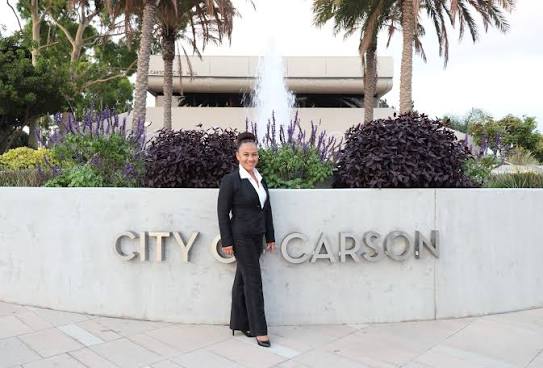
For Carson Mayor Lula Davis-Holmes, the celebration was more than a milestone for the university. It was a personal reminder of how far her alma mater has come.
A proud CSUDH graduate, Davis-Holmes addressed the gathering wearing what she described as two hats: one as mayor of the city that is home to the university and the other as a member of the Toro family.
“I come today wearing two hats. One is the mayor of this great city, and one is a proud Toro,” she told attendees.
Davis-Holmes reflected on the university’s transformation since her days as a graduate student, recalling a campus with far fewer facilities and amenities.
“You’ve come a long way. You’ve come a mighty long way,” she said.
The mayor also shared how encouragement from her professors helped her persevere through the challenges of earning her master’s degree, underscoring the lasting impact of faculty mentorship and student support.
She connected the university’s investments to Carson’s designation of 2026 as the “Year of the Child,” emphasizing the importance of creating environments where young people feel valued, supported and equipped to succeed.
For Davis-Holmes, the new housing, dining and wellness facilities represent more than physical improvements. They reflect a commitment to providing students with the resources and encouragement necessary to pursue their educational goals.
The mayor congratulated university leadership, including former President Dr. Thomas A. Parham and Interim President Dr. Mary Ann Villarreal, for advancing a vision that continues to strengthen the university’s relationship with the City of Carson
State Sen. Laura Richardson, whose 33rd Senate District includes Carson, reflected on how dramatically CSUDH has evolved from its earlier reputation as a commuter-oriented institution.
Richardson said the university once faced challenges attracting students because of limited campus housing, dining options and amenities commonly associated with a traditional residential college experience.
“This campus was one that people said, there’s no place to live. There’s not a lot of places to eat. That’s like my last choice,” Richardson said.
She credited university leadership, particularly former President Dr. Thomas A. Parham and the current administration, with helping transform that perception.
“What you and the former president have done is taken this university to be a university of choice,” Richardson said.
Richardson also highlighted the critical role of the California Legislative Black Caucus in securing state funding to support the university’s expansion and development of new campus facilities.
She recognized Assemblymember Mike A. Gipson and former state Sen. Steven Bradford for their leadership and advocacy, emphasizing that the investments were made possible through a collective legislative effort.
The senator called on current and incoming state leaders to continue championing investments in higher education, ensuring that CSUDH has the resources necessary to sustain its growth and expand opportunities for future generations of students.
Among the most significant additions is the new Health, Wellness and Recreation Center, a project university officials described as an example of student leadership and long-term institutional investment.
Dr. Tiffany Herbert, interim vice president for student affairs, explained that the facility originated through a student-driven initiative to expand access to comprehensive wellness services.
Former Associated Students, Inc. President Jonathan Molina Mancio and 13 fellow student leaders helped spearhead the effort, researching wellness facilities at other universities and working with campus administrators and architectural partners to develop a model tailored to CSUDH students.
The student leaders subsequently championed a referendum that asked students to support the facility through increased fees.
The referendum passed, providing a foundation for the project.
Herbert emphasized that the students involved were motivated by a desire to improve the campus experience for future generations, even though many would graduate before the center opened.
“They were not building something for themselves. They were building something for the Toros who would come after them,” Herbert said.
The new center brings multiple aspects of student wellness together in one location, including medical and mental health services, fitness opportunities, a swimming pool, outdoor adventure programming, massage amenities and light therapy.
Herbert said the project’s guiding philosophy was that access to wellness should not be considered a privilege reserved for a select few.
Student involvement extended beyond advocating for funding. According to Herbert, students participated in shaping the building’s design, identity and programming priorities.
She described the facility as a physical representation of the university’s commitment to treating student health and well-being as essential components of academic success.
The university’s new residence hall and dining commons represent another major step in its transition toward a more connected campus environment.
University leaders emphasized that providing students with access to housing and meals can improve their ability to concentrate on coursework, participate in campus activities and develop relationships with faculty and peers.
Herbert noted that these investments are especially important for students who may face financial pressures, housing insecurity or competing responsibilities outside the classroom.
“Developing accessible housing and dining on campus do more than meet student basic needs,” Herbert said. “They help create a stronger foundation for student engagement.”
The new facilities are expected to strengthen the university’s sense of community by creating additional opportunities for students to live, study and interact on campus.
For an institution historically associated with students commuting to classes and leaving afterward, the changes represent a substantial cultural shift.
The ribbon-cutting celebration also recognized the new Orthotics and Prosthetics Science and Technology Hub, which brings the university’s established graduate program back onto campus.
According to university officials, the program trains a substantial share of California’s orthotics and prosthetics professionals, with the ceremony’s master of ceremonies citing a figure of approximately 85 percent.
The new hub provides specialized space for faculty and students to work with patients, develop clinical skills and advance the technologies used to support individuals with mobility challenges and limb loss.
Villarreal highlighted the program’s potential role in the 2028 Paralympic Games, when the Carson area will host Olympic and Paralympic competitions at Dignity Health Sports Park.
The university anticipates opportunities for its orthotics and prosthetics program to support athletes and contribute specialized expertise during the international sporting events.
Villarreal also recognized CSUDH alumna and Paralympian Jillian Elwart, who competed in para canoe at the 2024 Paralympic Games in Paris.
Elwart, a prosthetic user who completed postgraduate training in orthotics and prosthetics at CSUDH, now works in pediatric prosthetic care at Shriners Children’s in Louisiana.
University officials described her accomplishments as an example of the institution’s commitment to connecting education with professional achievement and community service.
Beyond the highly visible student facilities, the celebration highlighted infrastructure improvements intended to support the university’s long-term sustainability and operational needs.
An upgraded electrical switchyard has increased the campus’s power capacity, helping support new buildings, cooling systems and other essential operations.
Villarreal said the improvements have already strengthened the university’s ability to maintain comfortable indoor environments during periods of extreme summer heat.
The campus has also expanded its electric vehicle charging infrastructure, with Villarreal reporting 203 charging stations.
She said the charging facilities are intended to serve both the university community and members of the public, extending the benefits of the investment beyond campus boundaries.
The improvements reflect the university’s effort to prepare for changing transportation needs while supporting broader environmental and sustainability goals.
Throughout the ceremony, university leaders repeatedly emphasized that the transformation would not have been possible without cooperation among students, faculty, alumni, donors, state lawmakers and community partners.
Villarreal acknowledged the leadership of former President Parham, whose administration helped initiate several of the projects, along with former university administrators and the many construction, design and facilities professionals involved in bringing them to completion.
The university also recognized the contributions of philanthropic supporters, including Shirley Smith and her late husband, Gil, whose longstanding generosity has helped support generations of CSUDH students.
The CSUDH Philanthropic Foundation underwrote the day’s celebration, while partners, including Southern California Edison, Dignity Health Sports Park, and the LA Galaxy, were recognized for their support and collaboration.
For Richardson, the investments represent an important example of how educational institutions can address unequal starting points among students by creating environments that support opportunity.
She stressed that housing, food, healthcare and reliable infrastructure are not secondary considerations but essential elements of student success.
Villarreal echoed that message, saying the university’s mission extends beyond helping students earn degrees to supporting their personal development, professional advancement and socioeconomic mobility.
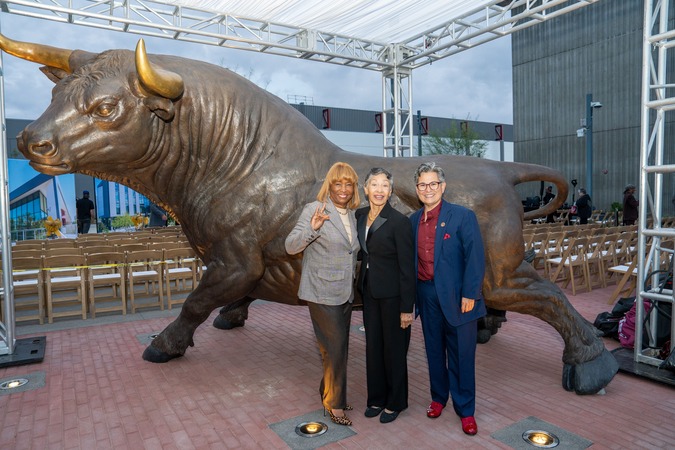
The ceremony also included plans for the unveiling of a new Toro statue, symbolizing the university’s identity and its next chapter.
As CSUDH continues to expand its campus and strengthen partnerships with Carson and the surrounding region, university leaders say the goal remains consistent: ensuring that every Toro has the resources, opportunities and sense of belonging necessary to thrive.
For Carson, the celebration represented more than new buildings. It marked another chapter in the growth of a university that continues to shape the city’s educational, economic and community future.