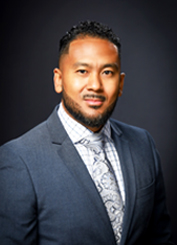
David C. Roberts Jr., Carson City Manager
Carson, CA — Since taking the helm as city manager in 2022, David C. Roberts Jr. has focused on reshaping internal operations, strengthening public safety and positioning Carson for long-term economic growth, a strategy he says is rooted in service, discipline and community trust.
Roberts, who first joined the city as assistant city manager in 2018, describes his path to leadership as guided by faith and a commitment to public service.
“I’m a man of faith,” Roberts said. “Having the Lord’s purpose that He’s put in me, He has really given me the ultimate servant’s heart.”
Before entering municipal government, Roberts served as a sergeant in the U.S. Army and later worked in the private sector with Burlington Northern Santa Fe Railroad.
He said those experiences shaped his leadership approach, blending military discipline with private-sector efficiency.
“It was really about duty and discipline,” he said of his military background, adding that his career has never been about titles but about service.
Roberts previously worked in municipal roles in San Bernardino and Hawthorne, where he developed experience in logistics, human resources and city operations.
Those roles, combined with his upbringing as a preacher’s child, informed what he calls a leadership style centered on integrity and accountability.
Since becoming city manager, Roberts has implemented what he describes as a phased approach to governance, beginning with internal reform.
“When I got appointed in 2022, my first 90 days really were about rebuilding morale and shifting our internal culture,” he said.
Roberts said the city prioritized employee compensation and benefits, resulting in what he described as the highest-paid municipal workforce in the South Bay and one of the strongest benefits packages in Southern California.
“It’s one thing to say we care and appreciate you,” he said. “But we wanted to show them that we truly appreciate them.”
After stabilizing the workforce, Roberts shifted focus outward, emphasizing infrastructure improvements, economic development and public safety.
Among the city’s most visible initiatives is a comprehensive street repair program.
Roberts said roughly 75% of city streets have been repaved as part of an ongoing effort to address longstanding complaints about road conditions.
“We’re about 75% now complete with the entire city being repaved,” he said.
Public safety has also been a key priority.
Roberts highlighted investments in surveillance technology and partnerships with law enforcement as contributing to declining crime rates.
“Our crime continues to go down annually every year,” he said, pointing to more than 400 high-definition cameras in city parks and over 170 license plate reader cameras positioned at entry points throughout Carson.
Roberts said these measures respond directly to residents’ concerns about safety, housing and economic opportunity.
“They want to be somewhere that’s safe and they want to be somewhere where there is an opportunity to purchase a home,” he said.
To address housing demand, the city is working on approximately 1,800 new homes, including both market-rate and affordable units.
Economic development has also been a focus, with Roberts noting that Carson’s general reserve fund has reached $252 million, the highest in the city’s history.
“We’ve got the largest reserve that we’ve ever had in the history of the city of Carson,” he said.
Looking ahead, Roberts said the city is entering a third phase of development aimed at transforming Carson into a regional destination.
Plans include redeveloping the civic center, constructing a new City Hall and adding a performing arts and entertainment district.
“We want Carson to be a place that people come to, not a place that they drive through,” he said.
Roberts also emphasized the city’s diversity as a defining characteristic.
He noted that Carson has one of the highest percentages of Black residents among cities in the region, alongside significant Asian Pacific Islander (API) and white populations.
“I believe it’s one of the most diverse cities in the United States,” he said.
Despite his public-facing role, Roberts said he remains personally reserved, describing himself as an introvert who prefers to avoid the spotlight.
“I believe in being a builder of bridges and not barriers,” he said, explaining that while he frequently speaks in public, he is “really an introvert by nature.”
Outside of work, Roberts spends much of his time with his family, including supporting his daughter’s dance career and attending sporting events.
For Roberts, the balance between personal life and public service reinforces his broader philosophy: leadership is less about recognition and more about impact.
“I don’t care about tags and titles,” he said. “It doesn’t move me.”
As Carson continues to grow, Roberts said his approach remains cyclical, focusing on internal strength, external progress and continuous improvement.
“You get your outcome and then you do it all over again,” he said.