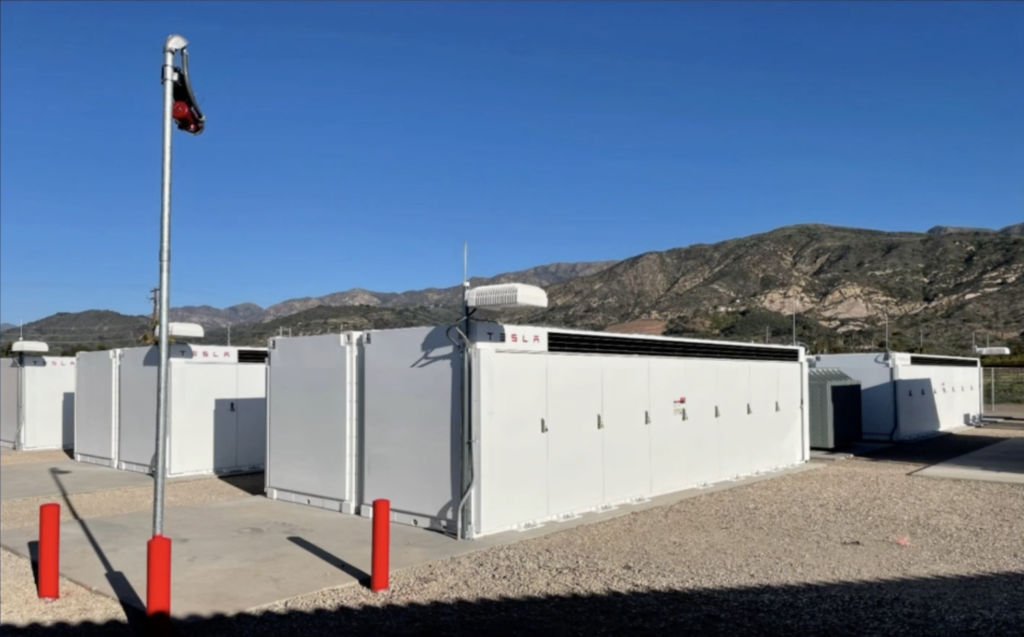
Screenshot of the rendering of the battery enclosures that will be utilized for the project presented on 3/10/2026 at the city of Carson Planning Commission Meeting.
Carson, CA — For more than a year, battery energy storage systems — commonly known as BESS facilities — have emerged as one of the most divisive issues in Carson politics, pitting clean-energy advocates and labor unions against residents worried about safety, environmental impacts and transparency.
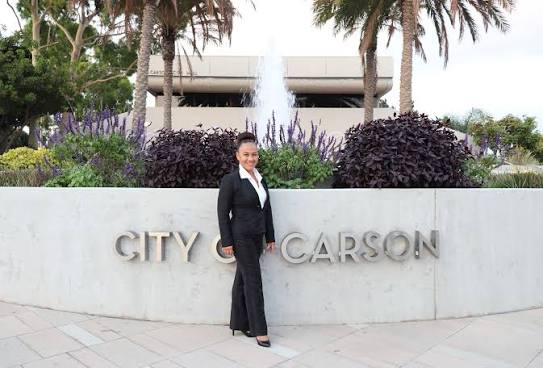
Now, newly resurfaced remarks from Carson’s 2024 State of the City address are drawing renewed scrutiny after Mayor Lula Davis-Holmes appeared to publicly champion battery storage development before later joining council member Cedric Hicks in opposing the controversial project near homes and Kaiser Permanente facilities.
At the 2024 State of the City event, the mayor praised two proposed battery storage projects as transformative investments for Carson’s future.
“These projects are being planned and implemented at little or no cost to the city,” Davis-Holmes said during the event. “Now let’s shift gears to an initiative that is powering our future. I’m talking about two battery storage facilities, one in District One and the other in District Four.”
The mayor framed the projects as critical infrastructure designed to stabilize the electrical grid, prevent blackouts and advance Carson’s environmental goals.
“By balancing electricity supply and demand, these facilities contribute to grid stability and resilience,” she said. “They can provide additional power during high demand and help prevent blackouts.”
During the same presentation, Kevin Smith, CEO of Arevon, described the project as a “$350 million investment into the City of Carson” that would generate tax revenue and union construction jobs.
“We’re thrilled to partner with the City of Carson,” Smith said. “If approved, we’ll break ground next year and officially contribute to Carson’s energy transition when the project is completed in 2026.”
The mayor later tied the projects directly to Carson’s sustainability agenda, highlighting the city’s regional environmental recognition and commitment to renewable energy solutions.
But the tone surrounding battery storage projects in Carson has shifted dramatically since those remarks.
At a contentious May 5th, Carson City Council meeting, residents, community leaders, and a local labor union packed council chambers to support the proposed 100-megawatt battery energy storage facility at 18800 Broadway Avenue.
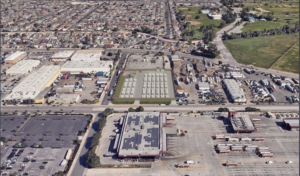
Screenshot of the rendering of the newly approved battery energy storage system site located at 18800 Broadway Ave. on the southeast corner of Griffith St. and Main St. that was presented on 3/10/2026 at the city of Carson Planning Commission meeting.
The proposed project had already been denied by the Carson Planning Commission in a 5-2 vote after commissioners raised concerns over land-use compatibility, cumulative environmental impacts, and public safety risks.
During the hearing, a handful of residents referenced battery fires in other California cities, including the highly publicized Moss Landing fire, arguing that thermal runaway incidents could pose catastrophic risks in densely populated neighborhoods.
“This is not about opposing clean energy,” one speaker told the council. “It’s about public safety and responsible review.”
Labor unions and clean-energy advocates, however, urged the city to approve the project, emphasizing construction jobs, energy reliability, and California’s broader transition away from fossil fuels.
The hearing exposed growing tension inside Carson over how the city should balance economic development, environmental justice, and public safety.
Ultimately, Councilmember Arleen Rojas introduced a motion to reverse the Planning Commission’s denial and approve the project with additional safety conditions, including:
- Increased perimeter wall protections
- Mandatory annual safety meetings
- Emergency evacuation planning
- A 24-hour public hotline
- Community benefit investments for schools and youth programs
The motion was seconded by Councilmember Jawane Hilton and passed in a 3-2 vote with the help of Councilmember Jim Dear.
Councilmember Hilton, who voted in favor of keeping the project on the table, said his position was rooted in preserving local control and preventing the project from simply being greenlit by the state without the city’s involvement.
Hilton’s vote reflected a broader concern, shared by some officials, that maintaining Carson’s authority to object to city projects within its borders could weaken the city’s leverage in negotiating for community benefits, oversight, and accountability. If the city were to lose local control, the facility could still be brought into the community without meaningful consideration for residents or their concerns.
Yet despite the council approval, residents say the broader political conversation around battery storage has noticeably changed since the optimistic messaging presented during the 2024 State of the City.
Residents now question whether city leaders underestimated public concern or failed to fully anticipate the backlash surrounding battery storage safety.
Others argue the mayor’s more cautious posture reflects growing pressure from residents demanding stronger oversight and accountability as more battery storage proposals emerge across Southern California.
The debate comes as California rapidly expands battery storage infrastructure to support renewable energy goals and reduce dependence on fossil fuels. State officials view battery storage as essential to stabilizing the power grid during periods of peak demand, especially as solar and wind energy production increases.
But communities across the state — including Carson — are increasingly questioning where these facilities should be located and whether emergency response systems are prepared for worst-case scenarios.
For many Carson residents, the issue is no longer simply about clean energy.
It is about trust.
And as battery storage projects continue to advance across the South Bay, residents are demanding clearer answers from elected city leaders about safety, transparency, and whether the push for green energy is outpacing public confidence.