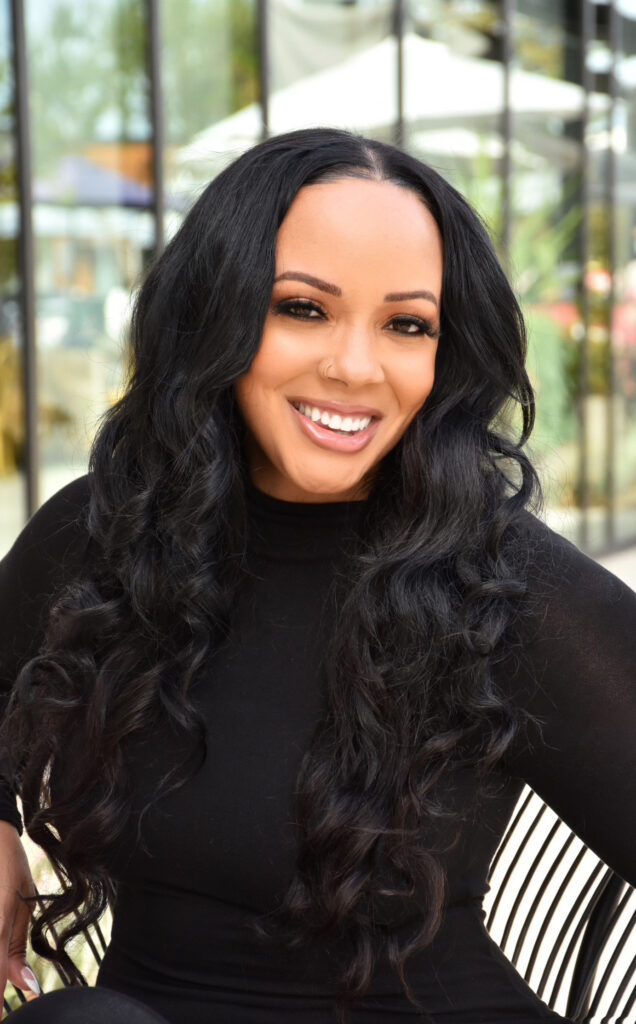
Kristin Smith, a breast cancer survivor and aide to Carson Councilwoman Arleen B. Rojas, reflects on her journey of faith, resilience and recovery after being diagnosed with Stage 2 triple-negative breast cancer at age 30.
Carson, CA — Kristin Smith had just come in from a run along the beach when she felt it. Stepping into the shower, she noticed a tenderness in her breast. When she pressed on it, she found a small knot.
“I went to my mom, and I was like, ‘Mom, come check this out,'” she recalled.
The next day she was at her gynecologist’s office. On Feb. 13, 2013, she learned she had Stage 2 triple-negative breast cancer, an aggressive form of the disease. The tumor measured about 3.8 centimeters. Genetic testing showed she carried a BRCA1 mutation, which raises the lifetime risk of breast and ovarian cancer.
She was 30. Her son was 4, nearly 5. And she had no health insurance.
Smith paid out of pocket for her first tests, including an ultrasound. Through a family connection, she got a mammogram at King/Drew Medical Center which closed in 2007.
She left her first consultation feeling she had few options. “I really felt like I was going to die,” she said. “I felt like there was no hope.”
Things began to turn when she qualified for Medi-Cal. Through her mother’s connections, she found an oncology practice in Los Alamitos that would treat her.
Coverage did not end the obstacles. Midway through chemotherapy, she was told a medication prescribed to keep her white blood cell count up was no longer approved and had to be returned. Without it, her next treatment was in jeopardy.
A close friend of her mother’s heavily leaned on Los Angeles County officials on her behalf. The approval came through just before her next appointment. “Literally at the nick of time,” she said.
Her son was her reason to push through.
“I just felt like I needed to be here for my son,” she said.
She had four months of chemotherapy, with infusions every two weeks. Each round knocked her down for most of the week.
“I would have treatment on Monday or Tuesday, and I would be down until Friday or Saturday,” she said.
She had been running on the beach three or four times a week. When she couldn’t run, she walked. “I was like, I’m going to keep moving. Just got to keep moving.”
The treatment changed how she looked. Her hair fell out, her nails turned dark, her eyebrows thinned and her face swelled.
“You’re young. I was 30 at the time, so I’m in my young prime,” she said. “You’re bald. Your nails are black. You’re just like, looking in the mirror, who am I?”
Near the end of chemotherapy, she tried to work out. As she began to sweat, her hands and feet broke into an intense, uncontrollable itch. She went to her car and cried. “I had a conversation with God,” she said. “I was trying to stay strong for the most part, but I just broke down. I just felt so defeated. Like, I just want to do what I’ve always done – stay active and fit, and I can’t even do that.”
After chemotherapy, Smith had a double mastectomy, a choice shaped by her BRCA1 mutation. Both breasts were removed, and tissue expanders were placed to begin reconstruction. Six weeks of radiation followed, Monday through Friday.
“I did feel like part of being a woman was taken away from me,” she said.
At the time, she did not think of herself as strong. “It was just something that I had to get through,” she said. “I wanted my life back.” Today, Smith considers herself cancer-free.
Asked who showed up for her in a way she will never forget, Kristin did not hesitate.
“All my friends did show up for me,” she said, “but most importantly, my mom.”
Her mother pushed her to get the lump checked, found doctors and stayed close throughout. Friends joined breast cancer awareness events in her honor, continuously surrounding her with love and support. Smith believes her diagnosis brought her family closer.
Breast Cancer Angels, a nonprofit that helps patients facing financial hardship, gave her gas cards and about $600 toward rent. That help shaped one of her goals: to give directly to patients struggling with rent, transportation and other daily costs during treatment, rather than to large national charities.
Faith carried her too. Before her third chemotherapy treatment, she was at a salon having a wig styled. The stylist asked if a girl of about 16 could pray for her.
“When I say that young girl prayed over me, like a pastor, a bishop,” she said. “She just told me to have faith.”
By her next visit, the tumor, once a hard lump she could easily feel, had shrunk noticeably, as chemotherapy given before surgery is meant to do. She recalls her doctor saying he might not have found it without knowing where to look. She still finished every treatment. But to her, that moment was a sign of God’s presence.
Thirteen years later, Smith says cancer changed what she notices.
“You hear the birds chirping. You feel the wind,” she said. “You pay attention to the little things that we take for granted every day.”
It also shapes her work as City Council Aide to Carson City Councilmember Arleen Rojas.
“I’m just very empathetic to any and everyone,” she said. “We all have our story. Everyone is dealing with something.”
A resident’s concern may look small to someone else, she said, but “it’s an issue that needs to be rectified.”
“In public service, we are here to serve,” she said. “Just as my friends showed up for me, I show up for them.”
Her message to women is simple: don’t ignore a change in your body. She later learned that her grandmother, two aunts and a first cousin had all had breast cancer, a history she urges women to know and discuss with their doctors.
“There’s something that doesn’t feel right, just go get it checked out,” she said. “No one’s gonna be an advocate for your health other than yourself.”
She does not wish cancer on anyone. But she would not erase it from her life.
“I wouldn’t change my story at all,” she said.
To someone newly diagnosed and afraid, she offers this:
“Having breast cancer is not the end of the road. A new story can begin now, and it’s even better than the one before.”