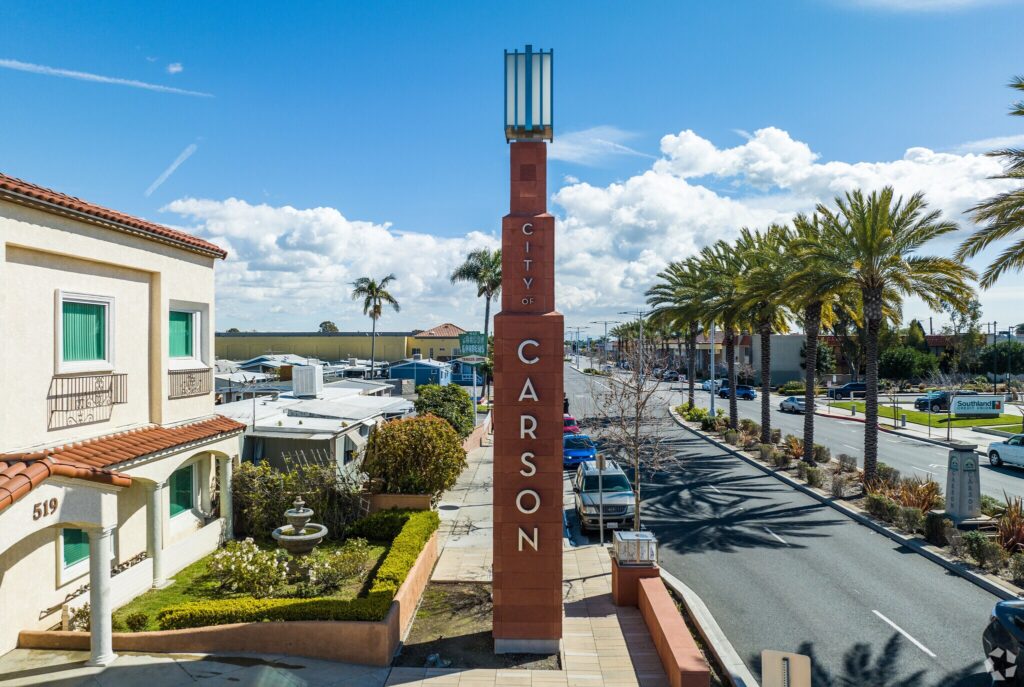
Carson, CA — Across Carson, cranes, construction fencing and redevelopment proposals are becoming part of the city’s evolving landscape.
From mixed-use developments and apartment projects to the long-discussed Civic Center revitalization plans, Carson is experiencing a housing and development surge that city leaders say could reshape the city’s economic future. But for many working families, the rapid pace of growth is raising an equally important question:
Will longtime residents be able to afford to stay?
Carson officials have increasingly promoted housing growth as part of a broader strategy to modernize the city, attract investment and address California’s housing shortage. Projects connected to the city’s long-term vision include new residential communities, mixed-use developments, hotel projects and entertainment-centered redevelopment.
The city’s population now exceeds 95,000 residents, while home values and rents continue climbing across Los Angeles County.
According to recent housing data, Carson’s median home value has risen to more than $700,000, while average rents approach $2,000 per month. For many working-class residents — particularly renters, seniors and younger families — those numbers are becoming increasingly difficult to manage.
At the same time, supporters of Carson’s housing expansion argue the city has little choice but to build.
California continues facing a severe housing shortage, and cities throughout the state are under pressure to approve additional residential units. Carson still has approximately 157 acres of developable land remaining, according to city figures, making it one of the few South Bay cities with room for substantial growth.
City leaders say new housing could generate economic activity, attract businesses, increase property values and help Carson compete regionally with neighboring cities undergoing redevelopment.
But residents say growth is already changing the character of the community.
Many longtime homeowners worry that increased density could strain traffic, parking, schools and infrastructure. Others fear newer market-rate housing could accelerate displacement pressures on lower-income residents who helped build Carson into one of the South Bay’s most diverse working-class communities.
Carson has historically been a city where many families were able to purchase homes and build generational stability through union jobs, industrial employment and public-sector work. Today, younger residents increasingly find themselves priced out of homeownership entirely.
That concern is especially significant in a city where multigenerational households are common and where many residents work in logistics, healthcare, construction, education and public service sectors.
Housing advocates argue the answer is not to stop development altogether, but to ensure growth includes:
- Affordable housing requirements
- Workforce housing protections
- Tenant protections
- First-time homebuyer opportunities
- Community benefit agreements
- Infrastructure investment alongside development
Others want the city to prioritize ownership opportunities over luxury rental expansion.
The debate also intersects with broader concerns about environmental justice and land use.
Some residents question why industrial-adjacent communities like Carson are being asked to absorb both large-scale housing growth and controversial infrastructure projects such as battery storage facilities and warehouse expansion simultaneously.
Meanwhile, supporters of redevelopment say Carson is at a turning point.
Major development projects could bring:
- New restaurants and retail
- Expanded tax revenue
- Revitalized commercial corridors
- Entertainment opportunities
- Increased regional visibility
- Job creation
The challenge, many residents say, will be making sure existing families benefit from that growth instead of being pushed aside by it.
As Carson continues evolving from an industrial hub into a city increasingly defined by redevelopment, entertainment and mixed-use investment, working families are watching closely to see whether the city’s next chapter will remain accessible to the people who have long called Carson home.