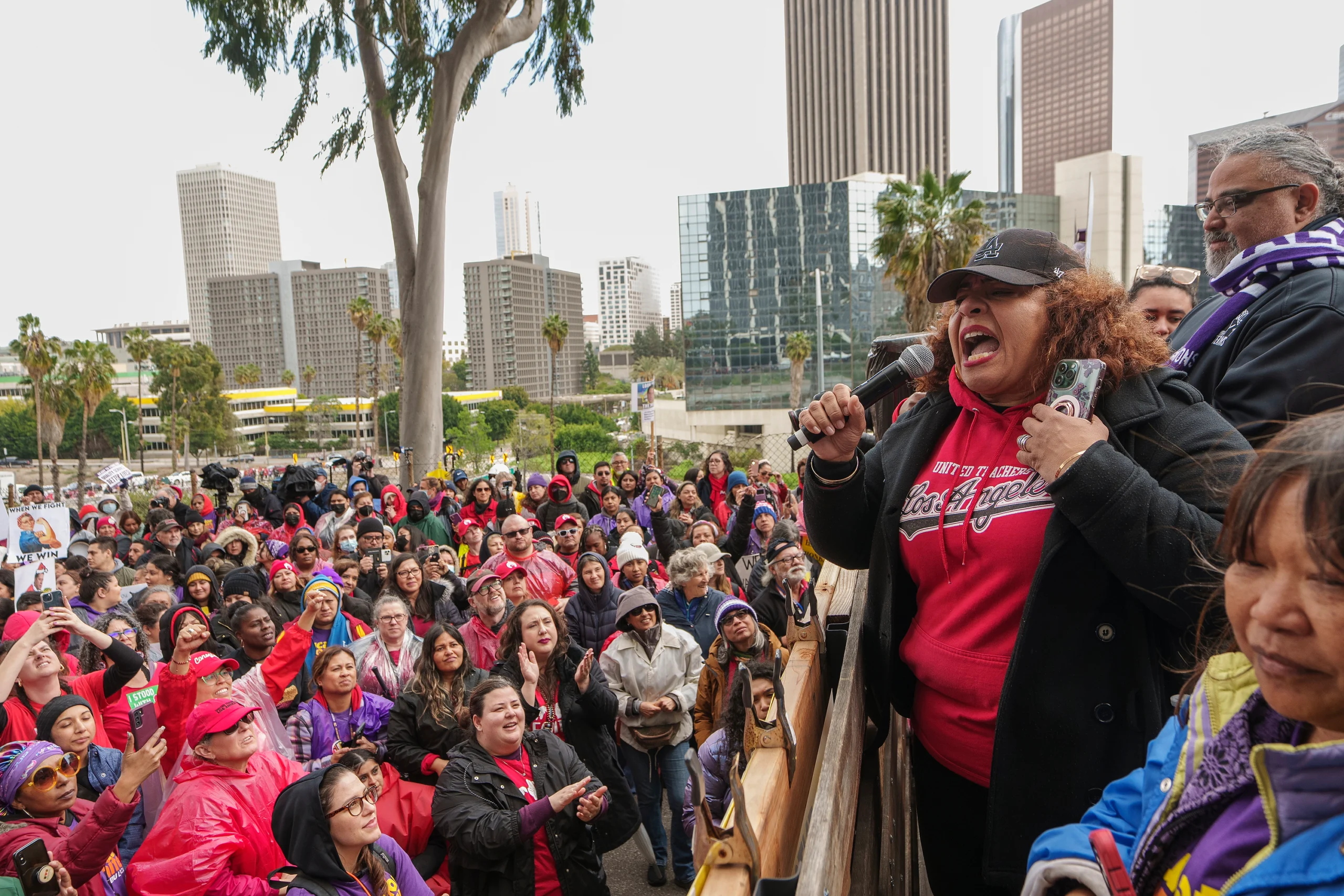
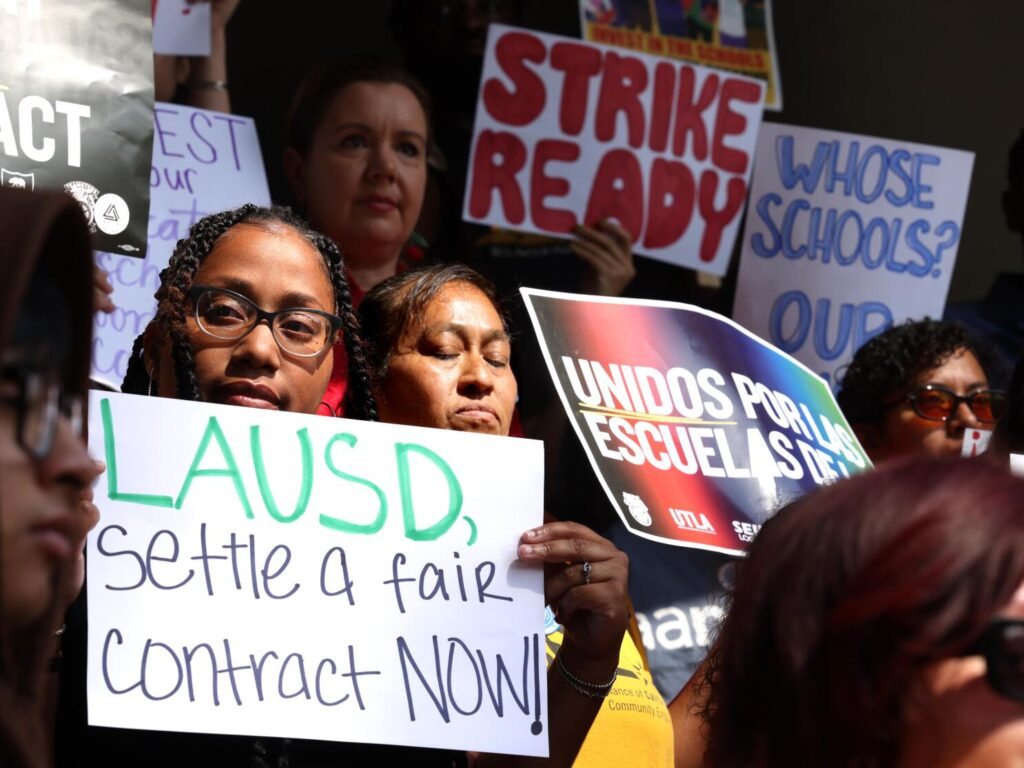
Los Angeles, CA — The school district serving the second-largest student population in the nation will not shut down this week, as the Los Angeles Unified School District and SEIU Local 99 have tentatively agreed to a new contract for support staff, narrowly avoiding a major disruption for students and families across the region.
Multiple unions representing thousands of educators and school workers had been prepared to stage a districtwide shutdown in solidarity with SEIU Local 99, including AFT Local 699 and AFSCME Local 2626. The late-night agreement ensures that nearly 400,000 students will remain in classrooms.
Behind the scenes, Los Angeles Mayor Karen Bass played a critical and strategic role in helping bring both sides to the table. As tensions escalated and the threat of a strike loomed, Bass stepped in to facilitate conversations, urging urgency and collaboration to avoid widespread disruption to working families across Los Angeles County.
“Mayor Bass understood what was at stake—not just for the district, but for families across the city,” said one source familiar with the negotiations. “Her involvement helped move conversations forward at a critical moment.”
“I stepped into negotiations to make sure that every effort was made to find an agreement to reach a compromise,” Bass said, while admitting that the city has no jurisdiction over the district, but wanted to help prevent what would have been a massive disruption. “Because a strike would disrupt the lives of hundreds of thousands of kids and their parents who need childcare, who need to go to school, and need to go to work.”
What emerged from the negotiations was more than just a contract—it was a unified front. All three major labor groups—support staff (SEIU Local 99), teachers (United Teachers Los Angeles, or UTLA), and school administrators—stood together in a rare demonstration of solidarity on behalf of students and families.
“Today was a victory not just in terms of wages, but in terms of the dignity and respect that every worker should receive for their hard work on behalf of students and families,” said an SEIU Local 99 member. “We fight together, we win together.”
Teachers had already reached a tentative agreement with the district, including salary increases aimed at addressing the high cost of living in Southern California. However, thousands of essential workers—bus drivers, custodians, special education aides, and cafeteria staff—remained at the center of the labor dispute.
The proposed agreement includes a 24 percent wage increase over three years, along with structural changes aimed at improving long-term workforce stability. District leaders and union representatives have pointed to proposed changes in the workweek as a meaningful step forward, noting that increasing hours for some employees could allow more workers to qualify for full-time status and, in turn, gain access to critical health benefits.
Beyond scheduling changes, the agreement outlines a broader investment in the workforce. It expands healthcare access for thousands of employees, strengthens protections against subcontracting, and reverses previously planned layoffs—particularly those affecting IT staff. The deal also calls for increased staffing levels across schools, a move aimed at ensuring students receive the consistent support they need both inside and outside the classroom.
“While not everything for which we fought was included in the agreement, it is a victory when workers say they refuse to be invisible,” said a union member. “We love our students, but we are also members of the communities where we work—and we need to be able to live here.”
For families throughout Los Angeles County, including those in Carson, Compton, and the South Bay, the potential strike raised immediate concerns about childcare, missed work, and disruptions to student learning.
“With the schools closing, this would have affected working parents,” said one Carson mother of two. “But this agreement is so great that it has opened the eyes of a lot of people to the hard work that these employees do on a daily basis.”
The agreement also brings renewed attention to the broader issue of economic inequity, as educators and school workers continue to highlight the gap between wages and the rising cost of living in Southern California.
The two-year contract follows more than a year of difficult negotiations, during which union members overwhelmingly voted to authorize a strike.
“More than just a contract,” said one education advocate, “this was about setting a new standard. When you invest in the people who serve our students, you’re investing in student success.”
For now, the immediate crisis has been avoided. Both sides are awaiting final ratification by union members and the school board.
Still, the moment represents more than a labor agreement—it reflects what can happen when leadership, labor, and community align around a shared goal. Mayor Bass’ involvement, combined with coordinated pressure from multiple unions, ultimately helped bring negotiations across the finish line.
As the district moves forward, the focus will shift to implementation—and whether this agreement can serve as a model for addressing equity, staffing, and the true cost of education across California.
“Students can feel when their staff is supported,” said a South Bay educator. “This isn’t just a labor win—it’s a student win.”