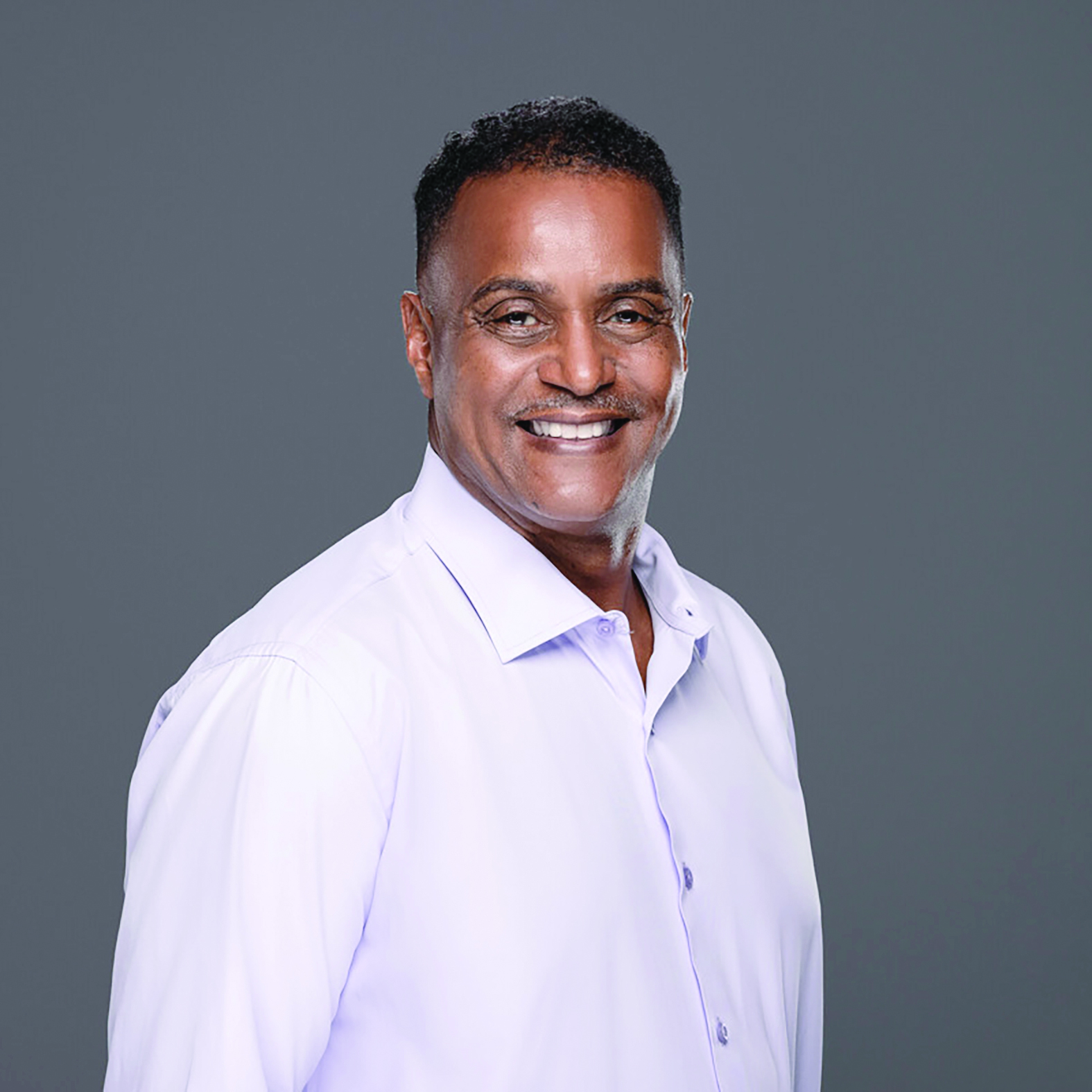
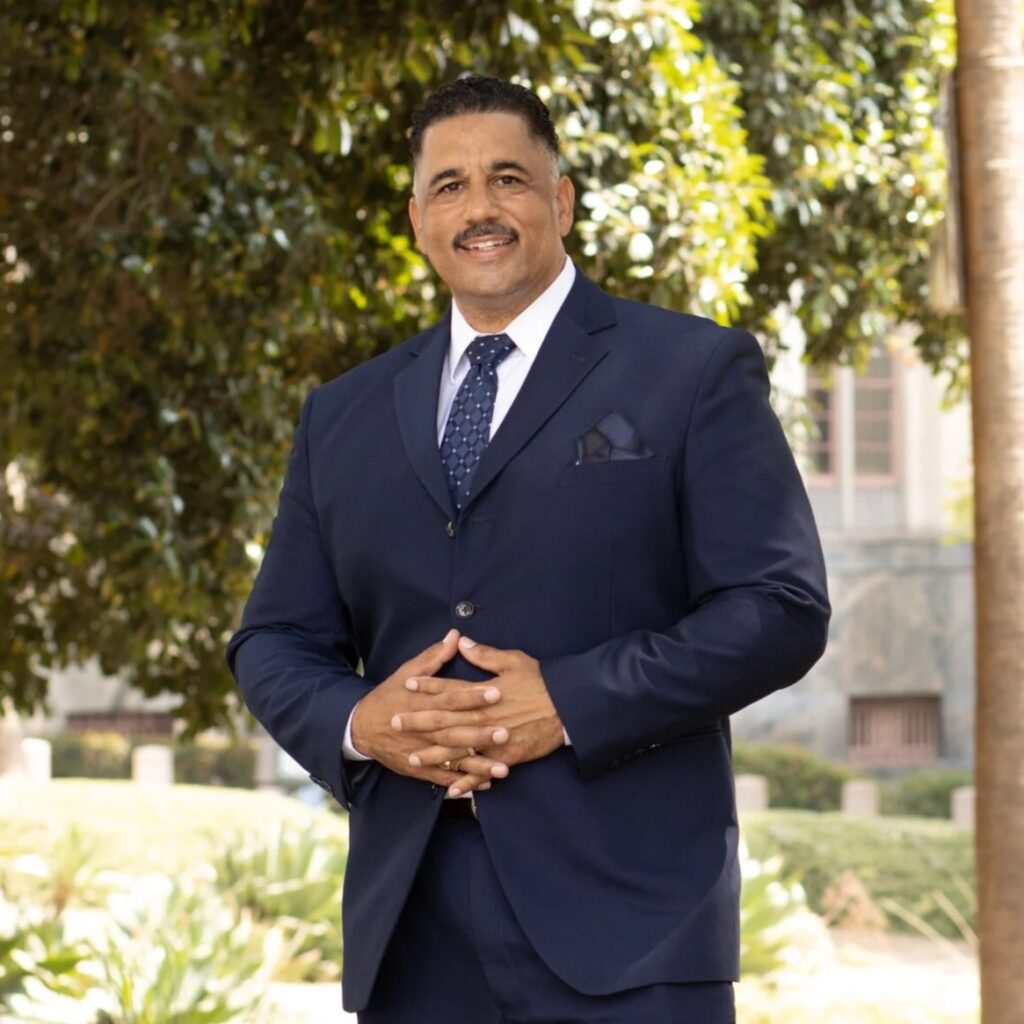
Eric Strong, candidate, Los Angeles County Sheriff
Los Angeles, CA — Los Angeles County Sheriff candidate Eric Strong is positioning his campaign around transparency, accountability and cultural change within one of the nation’s largest law enforcement agencies.
Strong, a veteran with more than three decades in law enforcement, said his decision to run stems from both personal experience and what he describes as ongoing systemic issues inside the department.
“One of the things that I did throughout my career is I really took a deep dive and I tried to learn as much as I could about the career,” Strong said, adding that his perspective is shaped by his experiences “as a father, as a husband and as a Black man that grew up in L.A. County” who has had both professional and personal encounters with law enforcement.
Strong previously ran for sheriff in 2022, finishing third. He said his decision to run again comes after what he described as a lack of meaningful change within the department.
“What I’ve seen over the last four years is that it hasn’t changed much,” Strong said of current leadership. “In a lot of ways our department’s even worse off now than it was before.”
Throughout the interview, Strong emphasized that improving public safety in Los Angeles County requires a shift in how law enforcement interacts with communities, particularly in a region as diverse as L.A. County.
“The expectation is, no matter who you’re dealing with, everybody gets treated with dignity and respect,” he said.
Strong advocated for a “customized service model” tailored to the needs of individual communities, noting that public safety concerns differ widely across the county, from Antelope Valley to Malibu to Compton.
“Everybody has a different issue. Everybody has a different concern,” he said. “Every single community needs to have a say and a voice in what goes on in their community.”
A significant portion of the conversation focused on racial disparities in policing, including findings from California’s Racial and Identity Profiling Act (RIPA) reports, which have consistently shown disproportionate stops and use of force involving Black residents.
Strong attributed these disparities not solely to individual deputies but to leadership and systemic accountability failures.
“The real issue lies with the decision makers,” he said. “If you don’t check them, if you don’t have accountability, they’re going to do what they do.”
He also pointed to internal investigative processes, arguing that failures to substantiate complaints, even in large numbers, signal deeper institutional problems.
“When you have 600 complaints and not one of them is substantiated, that is a leadership issue,” Strong said.
Strong further argued that disparities in enforcement practices across communities contribute to skewed data and perceptions of crime.
“If traffic stops are inherently dangerous, why do they get everybody out of the car in Compton but get nobody out of the car in Malibu?” he said. “My point is it’s a racially driven practice.”
Beyond community interactions, Strong described what he characterized as discriminatory practices within the department itself, including disparities in discipline, hiring, retention and promotions affecting Black deputies.
“African Americans get disciplined much more frequently and at a higher level,” he said, adding that retention is often overlooked when agencies highlight hiring diversity. “Nobody asks the question, ‘How many did you retain?’”
He also detailed concerns about promotional processes, alleging that decisions are sometimes influenced by internal negotiations rather than merit-based criteria.
To address these issues, Strong said leadership must actively intervene, enforce accountability and change the department’s culture.
“You change a culture by messaging,” he said. “You have to show people that racial discrimination is not acceptable.”
If elected, Strong said his immediate priority would be increasing transparency, which he described as both achievable and foundational for broader reform.
“Right away, we can start being transparent,” he said, pointing to cooperation with civilian oversight and the release of internal data as key steps.
He argued that transparency would establish a measurable baseline for progress and allow the public to hold the department accountable.
“It’s going to give us a baseline, a measuring stick,” Strong said. “Everybody else is going to be able to see it.”
While emphasizing transparency as an initial step, Strong acknowledged a wide range of challenges facing the department, including recruitment, jail conditions, deputy misconduct and community trust.
“There’s so many issues that are so important,” he said. “Transparency is the one that I think we can start working on immediately.”
As the race for Los Angeles County sheriff unfolds, Strong’s campaign centers on reshaping both the internal culture of the department and its relationship with the communities it serves, a task he says begins with openness and accountability at the top.