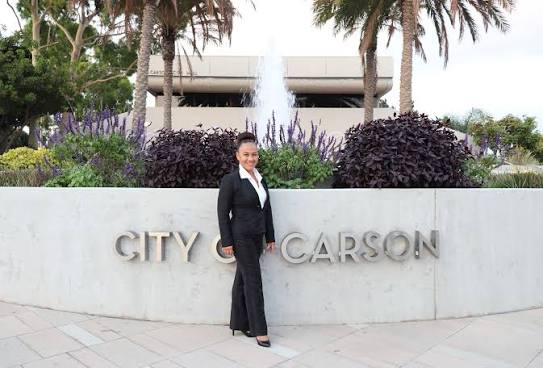

Kerry Neal is the founder and creator of Urban Birds & Bees, a social change movement and podcast that elevates the discussion regarding Black relationships including dating practices, mate selection, and self-awareness
Fontana, CA — Hey ladies (and guys) out there–have you ever been told, “You’re so pretty—why are you still single?”
Or maybe you know the male version: educated, gainfully employed, emotionally literate—or at least he knows the word “vulnerability”—and over six feet tall. Yet somehow, he’s still unmarried. Before long, somebody’s auntie is trying to introduce him to her coworker’s daughter because, “We can’t let good stock like that be in them streets too long!”
I’m seeing this everywhere.
Every time I see a social media post featuring Keke Palmer and conversations about love and relationships, I feel like someone is trying to crack the Da Vinci Code of modern dating. And we all know people like this: beautiful, educated, accomplished, financially stable, well-traveled, with a credit score that looks righteous and a passport stamped—and single as a dollar bill.
So what’s going on?
Are all these beautiful, successful women single because there aren’t enough suitable men? Are successful men single because women have become too demanding? Is everybody “intimidated” by everybody?
Or—and stay with me here—could some of us be fabulous on paper and difficult in practice? Because your résumé can get you an interview. It cannot get you intimacy. And the numbers tell us there really is something happening in Black relationships.
According to Pew Research Center’s analysis of Census data, 61% of Black adults were living without a spouse or romantic partner in 2023, compared with 38% of White adults and 35% of Asian adults. And in 2024, 48% of Black adults had never married, compared with 29% of non-Black adults. Black women were also less likely to be married than Black men—29% versus 36%. So no, you are not imagining things. But demographics cannot explain everything.
One interesting wrinkle is education. Black women have made extraordinary educational gains: 30.7% of Black women 25 and older held at least a bachelor’s degree in 2024, compared with 24.3% of Black men. That’s something to celebrate. But it can also affect the dating market when people strongly prefer partners with similar educational, professional, cultural, and economic backgrounds.
Notice I said affect. Not doom.
Being accomplished does not make you undate-able. But accomplishment does not automatically make you relationship-ready either.
Licensed psychologist Dr. LaWanda Hill specializes in working with Millennial and Gen X Black women, including high-achieving professionals. She notes that women who appear highly successful externally may privately struggle with anxiety, burnout, self-esteem issues, imposter syndrome and relationship challenges. And sometimes the very characteristics that helped us survive and succeed professionally can become problematic romantically.
Licensed therapist and relationship expert Dr. Nedra Glover Tawwab has built much of her work around precisely this tension: healthy relationships require boundaries, communication and expectations—but also an ability to navigate closeness and independence. Some of us have become so good at protecting our peace that nobody can get through security.
“State your business.”
“I’d like to love you.”
“Do you have an appointment?”
Sir, please leave your vulnerability at the front desk.
There’s another issue nobody likes discussing: the checklist. Must have a degree. Must earn X amount. Must be a certain height. Must dress well. Must love God. Must have gone to therapy. Must not have too many children. Must travel. Must love dogs. Must be emotionally available, masculine yet sensitive, ambitious yet always accessible, assertive yet never controlling, financially successful yet somehow free every Saturday.
Ma’am, you are not dating anymore. You are issuing an RFP. And men do it too.
She needs to be beautiful but not “too into herself,” successful but not too busy, independent but still “need” him, sexy but modest, nurturing but not clingy, confident but never challenging.
Bruh.
So, what do we do if we suspect we might be Fine, Fabulous, and Forgotten?
Start by replacing “Why can’t I find anybody?” with a more courageous question:
“What is it like to be in a relationship with me?”
Can I accept correction without feeling rejected? Can I express disappointment without being punished? Can I be vulnerable without feeling weak? Do I actually make room in my carefully curated life for another human being? Am I choosing emotionally available people—or repeatedly becoming fascinated by people I must convince to choose me?
Maybe therapy is needed, along with expanding your social circles and reconsidering a few preferences that have masqueraded as non-negotiables. It may also mean accepting that being single is not evidence that something is wrong with you.
The dating market is complicated. The demographics are real. Timing is real. Compatibility is real. But self-reflection is real too.
So yes, keep being fine. Keep being fabulous. But just remember:
The qualities that make people admire you from across the room aren’t necessarily the qualities that make someone feel safe enough to love you up close. Becoming emotionally available enough to recognize this might be the start of something amazing.
Because nobody wants to spend another year being everybody’s “How are YOU still single?”