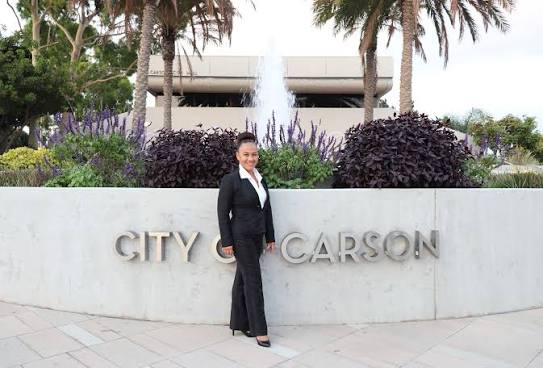
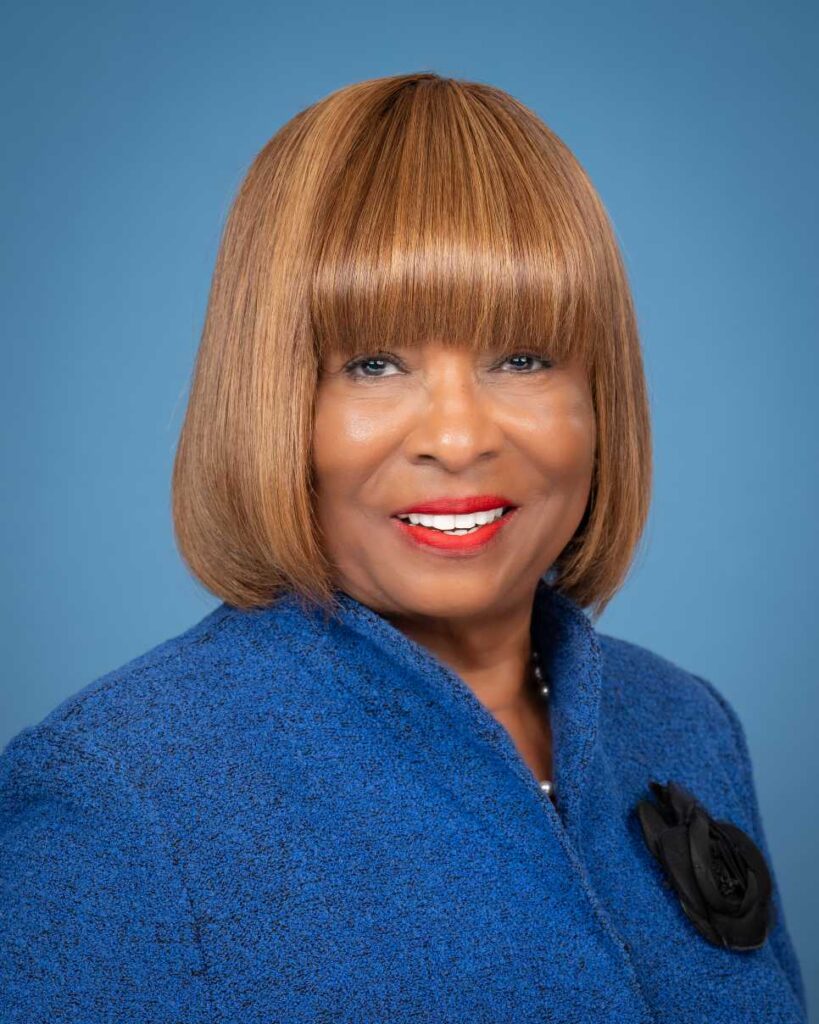
Lula Davis-Holmes, Mayor
Carson, CA — Lula Davis-Holmes said her path to leading the city began decades ago in its parks and has evolved into a broader vision centered on economic development, youth investment and positioning Carson on the global stage ahead of the 2028 Olympics.
In a recent interview with the Carson Compass, Davis-Holmes traced her roots in public service back to her early years working with youth programs.
“My journey started in Carson as a volunteer at Del Amo Park, working with the kids as a team mother on the football and basketball teams,” she said.
That early involvement led to a career with the city’s Parks and Recreation Department, where she rose through the ranks to become one of its first female leaders. Her experience ultimately shaped her decision to enter politics.
“You’re going to either be a part of the problem or you’re going to be a part of the solution,” she said of her decision to run for City Council in 2007.
Elected mayor in 2020, Davis-Holmes emphasized her commitment to local governance, saying she has no aspirations beyond Carson.
“I just want to serve my residents here in the city of Carson because it’s my feeling that local government is where the rubber meets the road,” she said.
Looking ahead, one of the city’s most immediate opportunities lies in its role as a host site for events during the 2028 Los Angeles Olympics.
Davis-Holmes said her administration is focused on ensuring Carson is recognized as more than just part of the larger Los Angeles region.
“Our guests need to know that they’re in the city of Carson,” she said.
Plans include the creation of cultural “villages” representing different countries, expanded community watch parties and a coordinated effort to highlight local businesses.
“We’re going to have various villages set up at a number of our parks in the city,” she said, adding that the goal is for visitors to “get a taste of Carson.”
Davis-Holmes said the broader objective is economic: ensuring local businesses benefit directly from the influx of visitors.
“The goal is for them to make some money from these events,” she said.
The mayor also highlighted her efforts to reshape the city’s identity. Once known primarily as a logistics hub, Carson is now being rebranded under the slogan “Jewel of the South Bay.” Davis-Holmes said the shift reflects both a strategic effort to attract investment and a desire to build civic pride.
“We’re no longer the warehouse city here in the city of Carson,” she said.
That rebranding effort has coincided with policy changes aimed at addressing long-standing concerns about environmental impacts from industrial activity.
The city has implemented air quality monitoring and revised its general plan to limit warehouse development.
“We updated our general so that warehouses can only be 30,000 square feet,” she said, describing efforts to reduce truck traffic and pollution.
Community concerns about traffic, refineries and environmental health remain central issues, she said, but are being balanced with economic priorities.
“Our business community is very important to the city of Carson,” she said.
Revenue from a newly implemented oil tax has helped fund infrastructure improvements, including long-delayed street repairs.
“That was the first time in our history that we have the revenue that we have to date,” she said.
Davis-Holmes pointed to youth and senior programs as among her most impactful initiatives.
The city has eliminated fees for youth sports participation, a move she said is designed to remove barriers for families.
“I didn’t want a mother with two or three kids to have to choose between which child was going to participate in sports,” she said.
The policy is paired with a volunteer requirement for families receiving assistance with uniforms, which she said helps rebuild community engagement.
“If we can get the adults back in the park with their children you create a family atmosphere,” she said.
Senior services have also expanded, including transportation programs and daily activities at community centers.
“We want to make sure that our seniors know that we care for them,” she said.
Looking to the future, Davis-Holmes identified housing, particularly for veterans and younger residents, as a key priority.
Plans include new developments and dedicated veteran housing projects.
“Veterans are near and dear to my heart,” she said.
She also outlined a broader ambition to transform Carson into a regional hub for technology and innovation.
“My goal is, eventually before I leave, to make Carson the Silicon Valley of the South Bay,” she said.
That vision includes investments in youth education, including a proposed teen center focused on financial literacy, technology and career development.
“It’s going to be a center where they can come and take classes and learn computers,” she said.
Davis-Holmes framed these efforts as part of a long-term strategy to cultivate the city’s next generation of leaders.
“These are our future leaders,” she said.
Reflecting on her leadership, she emphasized teamwork and preparation as key factors in her approach to governance.
“There’s no I in team,” she said, describing collaboration among city officials.
For young women considering a path in public service, Davis-Holmes offered direct advice: “Find that role model, set goals and objectives for yourself and then implement them.”
As Carson prepares for continued growth and international attention, Davis-Holmes said the message she wants to send is clear: “We are a city on the move, and we are the jewel of the South Bay.”