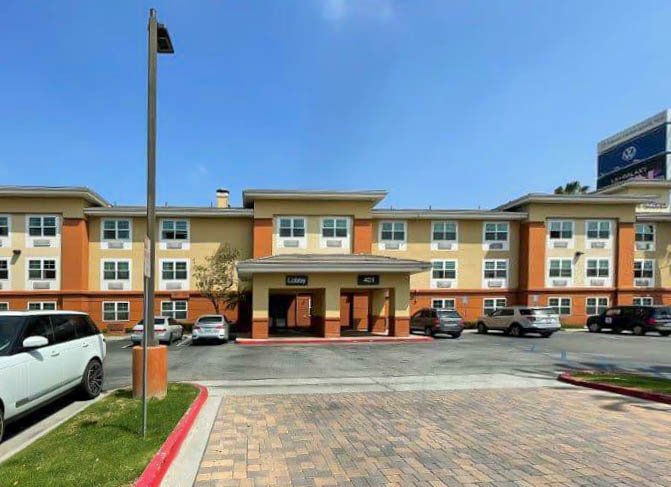
The Weingart Primrose site that will include 107 studio apartments with on-site services. Amenities include a community patio, pet area, landscaping, security, and accessibility features
Carson, CA — As construction of the Primrose supportive housing development continues, Carson City Council members say the conversation has shifted from whether the project will move forward to ensuring the city has a meaningful role in its operation.
Following Los Angeles County Supervisor Holly J. Mitchell’s recent open letter and fact sheet addressing community concerns about the Project Homekey development, the Carson Compass spoke with Councilmembers Arleen Rojas, Jim Dear and Jawane Hilton, as well as Mayor Pro Tem Cedric Hicks. While each offered a distinct perspective, all shared one overarching message: Carson wants to be a partner—not a bystander—in decisions that directly affect its residents.
None of the council members interviewed opposed providing housing for people experiencing homelessness. Instead, they questioned whether the project that ultimately emerged reflects what Carson believed it was supporting several years ago and whether the city and its residents will have sufficient influence over its operation.
Hilton framed the issue as a balance between compassion and local accountability.
“I believe Carson can support compassionate housing solutions while also advocating for safeguards that protect the quality of life our residents expect,” Hilton said. “Compassion and accountability are not mutually exclusive. We can care deeply about vulnerable populations while also expecting transparency, safety and responsible implementation.”
Mayor Pro Tem Cedric Hicks said the city’s concern has never been about whether homelessness should be addressed, but about ensuring Carson residents have a meaningful voice in determining what that solution looks like locally.
“We had specific needs and specific wants that weren’t heard,” Hicks said, explaining that while the city understood a Homekey project was being considered, local leaders expected a greater role in shaping how it would serve the Carson community.
Councilmember Arleen Rojas echoed that sentiment, recalling that early discussions centered on helping Carson’s own unhoused residents and students attending California State University, Dominguez Hills.
“There was genuine excitement at first,” Rojas said. “We believed this was an opportunity to help people who are already part of our community.”
According to Rojas, it wasn’t until later discussions that city leaders realized the project could not be dedicated exclusively to CSUDH students under the existing funding structure, dramatically changing expectations.
Hilton said the earlier discussions about addressing student housing insecurity remain significant even though the project’s direction has changed.
“One of the opportunities that resonated with many of us was the possibility of addressing housing insecurity among college students,” Hilton said. “Those conversations highlighted a very real need that still deserves attention.”
Supervisor Mitchell’s fact sheet states Carson was notified during the Homekey process and references the city’s 2022 Housing Element as evidence that officials anticipated a Homekey project.
Councilmember Jim Dear, however, said the larger issue is whether residents themselves were adequately informed throughout the process.
“If discussions began years ago, why wasn’t the community engaged much earlier?” Dear asked. “Residents deserved to understand what was being considered before it reached this point.”
Dear said public confidence depends not only on whether legal notification requirements were met, but on whether residents felt included in conversations affecting their neighborhoods.
Hilton agreed that the debate should not be reduced to whether residents support helping people experiencing homelessness.
“Most people do,” Hilton said. “The real question is whether local communities have meaningful input in how those solutions are implemented.”
With the project moving forward, council members said their focus has shifted toward accountability after residents begin moving in.
Hicks said Carson intends to advocate for strong operational standards, including enforcement of existing city ordinances governing loitering, trespassing and other neighborhood quality-of-life concerns.
“We’re asking that this facility operate under the same expectations as every other property in Carson,” Hicks said.
Rojas similarly emphasized the importance of ongoing oversight, suggesting the development include robust security measures, controlled access, and continuous behavioral health and supportive services to ensure both residents and surrounding neighborhoods remain safe.
Hilton said residents need specific information about how the site will be managed—not general assurances.
“Residents deserve to know what operational standards will be in place, what support services will be available, and how success will be measured over time,” Hilton said.
Rather than simply housing individuals, Rojas believes the project’s success will depend on providing long-term services that help residents transition toward stability.
The interviews also highlighted broader questions about how supportive housing should function.
Drawing from experiences with regional homelessness initiatives, both Hicks and Rojas discussed the value of comprehensive case management, substance abuse treatment, mental health services, employment assistance, and individualized support that follows residents beyond simply receiving housing.
“The goal should be helping people move from homelessness to independence,” Hicks said, noting that housing alone is only one piece of a much larger solution.
While Supervisor Mitchell’s letter addressed concerns regarding Weingart Center Association, funding requirements, and the county’s oversight process, council members said several questions remain unanswered.
Among them are:
What specific role will Carson officials and residents have on the proposed community stakeholder task force?
What public safety standards will govern daily operations?
How will success be measured and reported to the surrounding community?
What mechanisms will ensure Carson residents continue to have input after the facility opens?
Hilton said any advisory body created around the project must include genuine local representation and remain active after the doors open.
“If there’s going to be a stakeholder advisory group, Carson residents should have meaningful representation,” Hilton said. “Community engagement shouldn’t end once construction is complete.”
Rojas also called for additional transparency regarding the financial aspects of the project, including the property’s acquisition and overall investment, while Dear said he hopes additional data regarding CSUDH student housing needs will help inform future conversations.
Hilton said the County, the City and community stakeholders must share responsibility for the project’s next phase.
“The project is advancing, so now our responsibility is ensuring accountability, communication and measurable outcomes,” he said.
Despite differing viewpoints on specific aspects of the project, the four council members agreed on one point: Carson remains committed to addressing homelessness while preserving the character and safety of its neighborhoods.
As the Primrose development nears completion, city leaders say the next chapter should focus less on revisiting the past and more on ensuring promises made to the community are fulfilled through transparency, accountability and continued public engagement.