
August is Black Business Month, a national observance recognizing Black entrepreneurs while encouraging consumers, corporations and public institutions to consider the role Black-owned businesses play in creating jobs, building wealth and strengthening communities.
But more than two decades after the observance began, Black Business Month is increasingly about more than simply encouraging people to shop at a Black-owned restaurant, boutique or professional service for 31 days.
It is also a conversation about economic opportunity, access to capital, business growth and what it takes for Black entrepreneurs to build companies that can survive for generations.
Black Business Month was established in 2004 by entrepreneurs Frederick E. Jordan and John William Templeton to bring greater attention to Black-owned businesses and the challenges they face.
Today, Black entrepreneurship is showing significant growth.
According to the latest data from the U.S. Census Bureau, approximately 201,000 Black-owned businesses with employees operated across the United States, generating roughly $249 billion in annual receipts.
That represents significant progress. Research examining Census data found that the number of Black-owned employer businesses grew by more than 60 percent between 2017 and 2023, substantially outpacing overall growth among U.S. employer businesses during the same period.
Those businesses do more than generate revenue.
They employ workers, lease commercial space, purchase goods and services, contribute taxes and often reinvest in the communities where their owners live.
Millions more Black entrepreneurs operate businesses without employees. From independent consultants and contractors to beauty professionals, caterers, photographers, designers, transportation providers and other entrepreneurs, those small enterprises represent another important part of the Black business economy.
For communities across Southern California, supporting those businesses can have an especially local impact.
A dollar spent with a neighborhood business can help support a local family, provide employment opportunities and strengthen a commercial corridor. When those companies grow, they can also become advertisers, sponsors, property owners, contractors and philanthropic supporters of other community institutions.
Yet growth in the number of Black-owned businesses does not mean longstanding challenges have disappeared.
Access to capital remains one of the most significant obstacles facing many entrepreneurs. Business owners also must navigate rising operating costs, commercial rents, workforce challenges, marketing expenses and the difficulty of competing against larger companies with significantly greater resources.
For newer entrepreneurs, the challenge can be simply moving from having a good idea to developing the financial systems, credit history, contracts and customer base needed to establish a sustainable company.
The U.S. Small Business Administration provides counseling, training, assistance with financing programs and guidance for businesses interested in government contracting. California’s Office of the Small Business Advocate also connects entrepreneurs with technical assistance, funding resources and programs designed to help small businesses compete for public contracts.
But Black Business Month also presents a challenge to consumers.
Supporting Black-owned businesses does not have to begin or end in August.
Consumers can intentionally identify businesses within their communities and incorporate them into their regular spending — whether selecting a restaurant, hiring a contractor, choosing an accountant, purchasing insurance, planning an event or obtaining professional services.
Businesses and government agencies can look at their own purchasing practices as well.
Large institutions spend millions of dollars each year purchasing food, printing, professional services, construction, technology, communications and other products. Ensuring qualified small and minority-owned companies have an opportunity to compete for those dollars can make business diversity part of an economic strategy rather than simply a seasonal campaign.
And Black entrepreneurs themselves are increasingly thinking beyond simply opening businesses.
The next step is scale.
That means building companies capable of hiring employees, securing larger contracts, acquiring property, expanding into additional locations and eventually transferring ownership or wealth to the next generation.
Black Business Month provides an opportunity to celebrate the entrepreneurs already doing that work — while recognizing how much opportunity remains.
The celebration may happen in August, but the economic impact can extend throughout the year.
Every contract awarded, customer gained, employee hired and business expanded contributes to a larger story about entrepreneurship and economic mobility.
And when locally owned businesses thrive, the entire community has an opportunity to benefit.
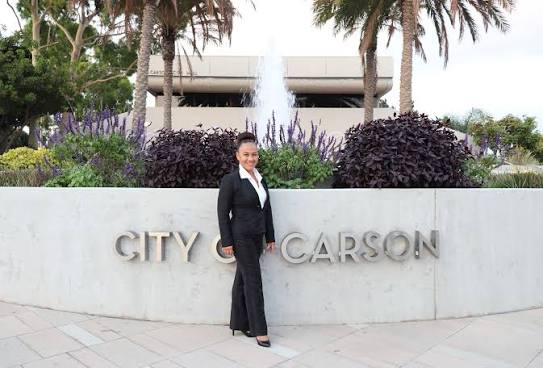
In Carson and throughout the South Bay, Black-owned businesses are an important part of the city’s diverse commercial landscape.
Carson residents regularly make decisions about where they eat, shop, obtain professional services, repair their vehicles, celebrate milestones and spend their household dollars. Those everyday choices collectively influence which neighborhood businesses are able to grow.
The Los Angeles District Office of the U.S. Small Business Administration provides businesses throughout the region with assistance related to financing, counseling and government contracting, while state programs offer additional resources for entrepreneurs seeking to expand.
There is also an opportunity for major employers, institutions and public agencies throughout the South Bay to examine how locally owned small businesses participate in their purchasing and contracting opportunities.
Black Business Month provides an opportunity to recognize Carson’s entrepreneurs — but their businesses need customers, partnerships and opportunities during the other 11 months of the year as well.
For Carson, supporting entrepreneurship ultimately means supporting a stronger local economy.