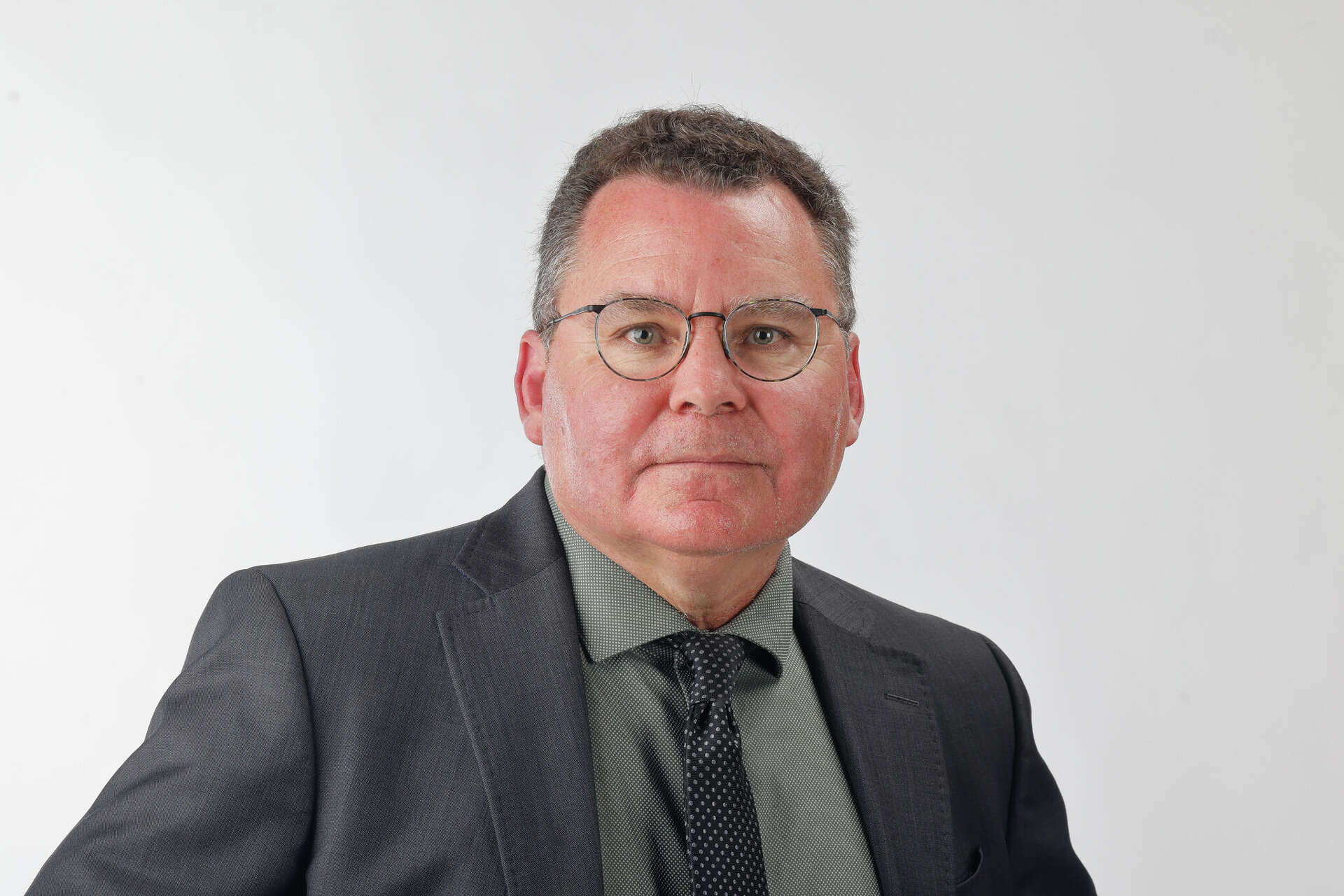
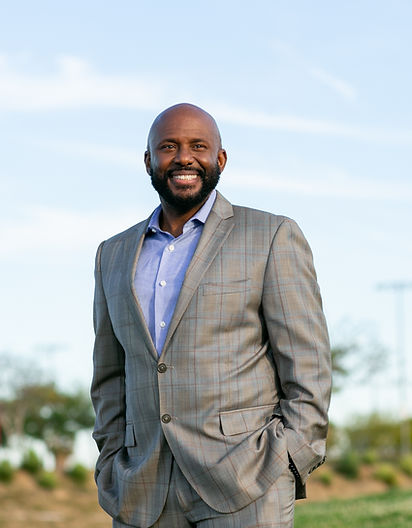
CA’s 65th District Assemblymember, Mike Gipson
Gardena, CA — After more than a decade in the California State Assembly, Assemblymember Mike A. Gipson says his next chapter is rooted in the same principle that has guided his public life from the beginning: service.
Gipson, who represents California’s 65th Assembly District, sat down to discuss his tenure in the Legislature, his personal road to public service and his upcoming bid for the California State Board of Equalization.
Throughout the conversation, he returned repeatedly to the experiences that shaped him — his parents’ example, his years in organized labor, his time on the Carson City Council and the personal tragedy that helped define one of his earliest legislative priorities.
For Gipson, the move toward the Board of Equalization is not unfamiliar territory. Before he was elected to the State Assembly in 2014, he worked at the Board of Equalization, beginning in a district role before later serving as chief of staff to Board Member Jerome Horton.
“I used to work at the Board of Equalization,” Gipson said. “So, I had that foundation. I knew the ins and outs of the Board of Equalization because I worked there.”
That experience, he said, has given him institutional knowledge of an office many voters may not fully understand but whose decisions affect taxpayers, homeowners, small businesses and local governments across California.
The Board of Equalization is one of California’s constitutional offices and has long played a role in tax administration, property tax oversight and ensuring more uniform assessment practices across the state’s 58 counties.
Gipson said his legislative experience has deepened his understanding of those issues, particularly through his work on the Assembly Revenue and Taxation Committee, where he has served as chair.
“I’ve had multiple layers of experience dealing with revenue taxation, interfacing with the Board of Equalization, interfacing with the Franchise Tax Board and all the policy inner workings with taxes within the state of California,” he said.
Gipson said that experience will shape his campaign message as he seeks a seat on the BOE. He argues that California taxpayers lost important public oversight when the board was restructured in 2017, after Assembly Bill 102 transferred many tax administration and appeal functions to newly created state agencies.
“The taxpayers of California need to get that back,” Gipson said. “We have taxation without representation.”
Gipson said his concern is that many taxpayers, especially small business owners, no longer have the same kind of direct public hearing process before elected board members that existed before the restructuring. He said larger corporations may have the resources to challenge tax decisions in court, while smaller businesses often do not.
“Who goes to Superior Court? Google, Amazon, big companies, corporations,” Gipson said. “Mom and Pop, who have a mortgage, don’t have those kinds of resources.”
If elected, Gipson said one of his top priorities would be restoring more public accountability, transparency, and taxpayer access to the board.
“That’s democracy,” he said. “That’s why the Board of Equalization was created.”
Gipson’s understanding of public service, however, began long before Sacramento. He said it was modeled by his parents, who taught him that leadership does not always require a title.
His mother was active as a PTA president and community leader. His father, Gipson said, became a labor leader after helping organize workers who did not yet have union representation.
“You don’t have to be elected in order to lead,” Gipson said. “You just have to have the heart to lead and the heart to change.”
That lesson followed him into organized labor, where he spent roughly two decades advocating for workers. He also served on the Carson City Council for nearly 10 years before being elected to the Assembly.
“I was born to serve,” Gipson said. “That is my why — to serve people wherever I go.”
When asked about the most profound moment of his legislative career, Gipson turned to one of the most painful chapters of his life: the death of his 3-year-old son, who was killed by a hit-and-run driver.
Gipson said the driver stopped, saw that she had hit a child and then returned to her car and fled. She was never found. At the time, California law included a statute of limitations that meant if the suspect was not found within a certain period, the person could avoid prosecution.
“That generated my obsession to change the laws of California,” Gipson said.
One of his first legislative efforts was aimed at extending the statute of limitations in fatal hit-and-run cases. Gipson said he ultimately helped move the timeline from three years to six years and then to nine years, though he still believes the limitation should be removed entirely.
“My work is not completed,” he said. “Even though it’s not going to help my family, I’m hoping to help someone’s family.”
Gipson said the issue is bigger than his personal loss. He wants to continue raising awareness about the responsibility drivers have to stop, render aid, and call for help.
“This is not roadkill,” he said. “This is a life.”
Another defining moment of Gipson’s legislative career, he said, was helping secure funding to keep Martin Luther King Jr. Community Hospital open. Gipson described the hospital as a “beacon of hope” for South Los Angeles and surrounding communities, recalling the devastating impact when the hospital previously closed and residents had to travel farther for emergency care.
He said securing funding for the hospital was one of his greatest legislative challenges, particularly during a difficult budget environment.
“We were facing a budget deficit in the state,” Gipson said. “People said that it could not happen.”
Gipson said he pressed state budget leaders and the governor’s finance team to understand the consequences if the hospital closed. He credited that effort, along with support from Los Angeles County Supervisor Holly Mitchell, with helping bring together tens of millions of dollars to stabilize the hospital.
“If I do nothing else, I can always hang my hat on knowing that I kept this hospital’s doors open,” he said.
Gipson also pointed to his work supporting Charles R. Drew University of Medicine and Science, saying that expanding access to medical education in South Los Angeles has been a major priority. He described the broader goal as helping build the university into a West Coast counterpart to Xavier University of Louisiana, known nationally for producing Black medical professionals.
For Gipson, health care, education, labor, public safety and tax policy are all connected by a common thread: making government work for communities that are too often overlooked.
As he prepares to leave the Legislature, Gipson said he hopes his legacy is simple.
“That he tried to help somebody along the way,” he said.
His bid for the Board of Equalization, he said, is an extension of that mission. Gipson wants voters to better understand the board’s role in ensuring fairness in taxation, oversight of county assessors and the broader relationship between taxes and essential public services.
He said taxes collected from businesses help fund schools, roads, parks, public safety, infrastructure and other core services. When businesses operate illegally or avoid paying their fair share, Gipson said, communities lose.
“Our kids are not getting the most up-to-date books and technology,” he said. “Our parks are not taken care of. Our first responders are not being taken care of.”
Gipson said he wants to bring the BOE back to what he believes was its intended purpose: a public, transparent body where taxpayers can be heard by elected representatives.
At the end of a first term, Gipson said he would measure success by whether he had helped restore authority, transparency and access to the board.
“That’s what we want to go back to,” he said. “Transparency, accountability and representation.”
Away from public office, Gipson said his downtime is limited, but he enjoys spending time with his grandchildren, going to the gym, riding horses when he can, and getting outdoors.
But even when asked about spare time, the conversation seemed to return to service — to churches, community events, families, students and the neighborhoods he has represented for decades.
For Gipson, public office is not simply a position. It is a continuation of what he says he was raised to do.
“Service,” he said, “is my why.”