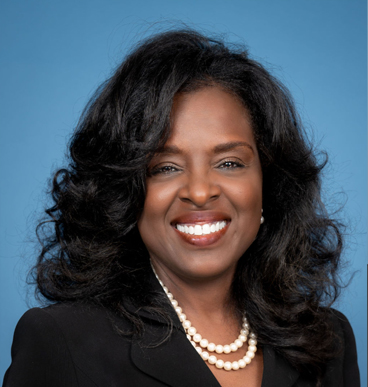
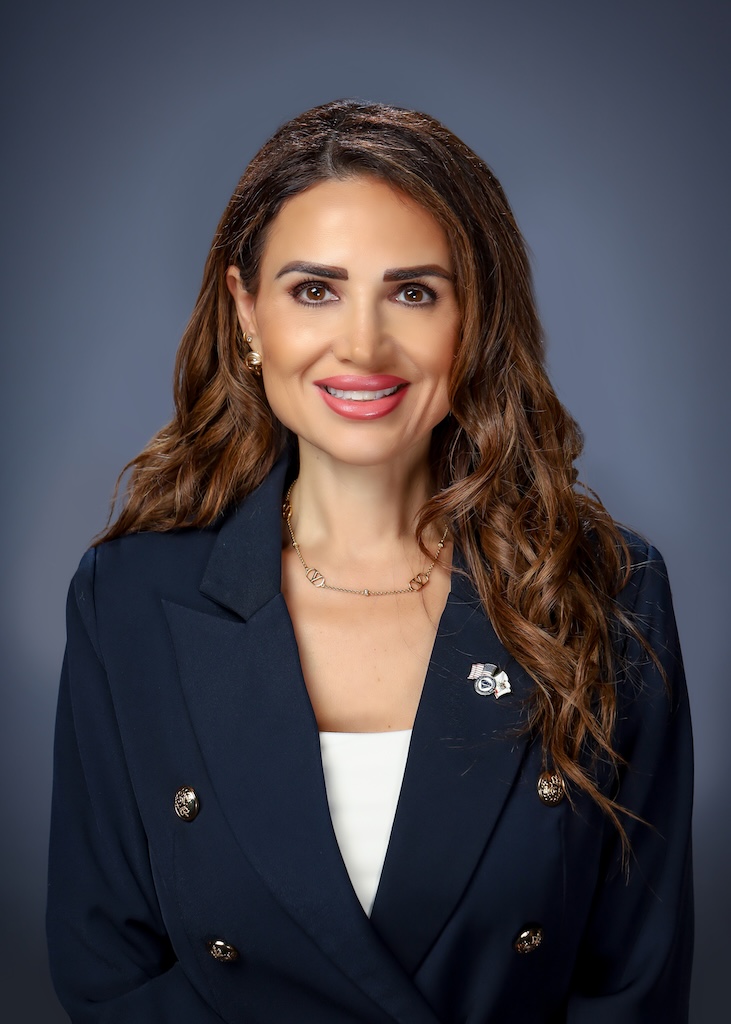
Arminé Chaparyan, Deputy City Manager
Editor’s Note: At The Carson Compass, we believe leadership is about more than policy—it’s about people.
Our Leadership Profile Series introduces the individuals shaping Carson’s future, highlighting their stories, values, and vision. Through these conversations, we invite you to understand what drives them and how they see our city evolving.
By bringing these perspectives forward, we aim to strengthen the connection between our community and those who lead it—while celebrating what makes Carson truly special.
For Carson Deputy City Manager Arminé Chaparyan, public service is more than a profession. It is rooted in one of her earliest memories of what government can mean to a family in need.
Chaparyan was born and raised in Armenia before immigrating to the United States with her family in the late 1980s. They settled in Pasadena, where her parents, new to the country and still learning English, turned to City Hall for guidance.
She still remembers a city employee coming to their home to help.
“He wasn’t a high-ranked official, but he was a staff member,” Chaparyan recalled. “I remember thinking, someone’s here to help guide my parents and my family as we go through this transition.”
That experience stayed with her.
“I think everything I’ve done has kind of led back to that fundamental time in my life,” she said. “Our roles are a role of not just leadership, but service.”
Nearly 25 years after beginning her career in local government, Chaparyan is now helping guide Carson through what she describes as one of the most transformational periods in the city’s history.
Chaparyan grew up in Pasadena and attended John Muir High School, an experience she says exposed her to the same kind of cultural and ethnic diversity she now sees in Carson.
She earned an undergraduate degree in political science from UCLA and a graduate degree in public administration from USC. From the beginning, she knew government service was the career she wanted.
“I wanted to work for the government,” she said. “I wanted to be in a role where I provided service.”
While in graduate school, she worked for the State of California. A mentor later encouraged her to explore local government, where she could see more directly how public administration affects everyday life.
In 2001, Chaparyan began her first municipal position with the City of West Covina. Carson is now the sixth jurisdiction she has served.
Her career has included roles in Santa Clarita, South Pasadena and Santa Monica, and she previously served as city manager for South Pasadena.
Two years ago, while raising three children and caring for an aging parent, Chaparyan began reconsidering what she wanted the next chapter of her career to look like.
“The answer for me came in the form of: I love serving,” she said. “I want to be in a role, regardless of title, where I’m providing a service to the community that I’m working for.”
That reflection eventually brought her to Carson, where she will mark her first year in September.
“Carson feels like home to me,” Chaparyan said. “I think because of that diversity, the cultural intersections, I feel very much that I fit in Carson.”
She also recognizes the perspective she brings as one of the highest-ranking women in the organization.
“I feel like I bring maybe a little extra flavor to the table,” she said. “It adds a different layer of diversity to our executive team.”
Asked what nearly 25 years in local government have taught her about leadership, Chaparyan pointed first to relationships.
Strong government, she said, depends on building partnerships while remaining grounded in integrity.
“Having to be flexible enough that you can work with everyone, but always holding strong to your fundamentals, your morals, your integrity,” she said.
For Chaparyan, entering City Hall means setting aside personal opinions and focusing on the community she serves.
“The minute I walk through the door, that’s hung outside,” she said. “Everything I do here reflects on how I serve this community and the needs of this community.”
That philosophy extends to everyday resident interactions.
“If I take a phone call from a resident who has a very minor issue, that issue to me is just as important as a larger issue that we are contemplating, because that’s a resident of this community,” she said.
Kindness, responsiveness and respect, she added, are fundamental responsibilities of public service.
While residents are generally familiar with the mayor, City Council and individual departments, much of the work of a deputy city manager happens behind the scenes.
Chaparyan oversees Human Resources and Risk Management, Finance, Information Technology and Government Relations. She also serves as the city’s lead on preparations for the 2028 Olympic and Paralympic Games.
The position was created as Carson continued to grow and its operations became increasingly complex.
“I can wear a lot of different hats depending on where the city manager needs me,” she said.
Her portfolio largely includes departments that support the city’s internal operations while also shaping major initiatives residents will eventually experience directly.
Ask Chaparyan what excites her about Carson’s next five to 10 years and her answer is immediate.
“Everything,” she said. “I literally twirl my way into work.”
Chaparyan believes years of planning and investment are beginning to converge.
“For a long time, Carson has been marinating,” she said. “We have been planning and strategizing.”
She describes Carson as being in the middle of a renaissance, both organizationally and throughout the community.
Internally, the city is becoming more sophisticated, with greater accountability, upgraded systems and higher expectations. Externally, residents are seeing investments in streets, parks, facilities, technology and development.
“This is a time where we roll up our sleeves and we help push all those initiatives forward,” she said.
Chaparyan points to infrastructure as one of the investments likely to have the greatest long-term effect on residents.
“They really are putting their money where their priorities are,” she said.
She also sees significant potential in development of available land and Carson’s fiber-optic initiative, which could strengthen the city’s competitiveness and provide new technology options for residents and businesses.
Then there is LA28.
As a venue city for the Olympic Games, Carson will receive global exposure that Chaparyan believes can accelerate economic development and introduce more people to the community.
“The next two years, with the Olympics kind of being the icing on the cake, I can’t wait to see where that’s going to take us,” she said.
Chaparyan’s professional background includes community and economic development, and she believes existing businesses should remain central to Carson’s growth strategy.
“Number one, it’s retaining our small business community,” she said. “I think that’s a huge part of the fabric of Carson.”
For businesses that have operated in the city for generations, Chaparyan believes the goal should be not only retention, but helping them expand.
Vacant commercial spaces also present opportunities for more creative temporary uses, such as pop-ups or galleries, while permanent tenants are recruited.
The broader goal is to give Carson residents more reasons to spend their time and money close to home.
“What do our residents want?” she asked. “How do we keep their dollars in the City of Carson so they’re not looking at nearby communities?”
She believes businesses investing today will benefit as Carson continues to evolve.
“Carson is the story that’s going to keep on writing its chapters,” she said.
Chaparyan believes outsiders sometimes misunderstand Carson.
She describes it as a strong middle-class community with substantial homeownership and generations of families who have remained connected to their neighborhoods.
She pointed to families whose grandparents purchased homes decades ago while working at the ports and whose grandchildren now own those same properties.
“That is a true definition of generational wealth,” she said.
But Carson’s defining characteristic, in her view, remains its diversity.
“We’re not your typical L.A. suburb,” Chaparyan said. “We are a true definition of a melting pot.”
That diversity is reflected in multiracial families, faith communities, nonprofit organizations and long-standing cultural traditions.
“It’s deep,” she said. “It’s deep and it’s strong.”
Chaparyan says collaboration across departments is essential because major city projects rarely belong to a single division.
“Almost every project touches every department in the city,” she said.
Bringing department leaders together early creates shared ownership and accountability.
“One person’s success is everyone’s success,” Chaparyan said.
She credits City Manager David Roberts with assembling a leadership team that blends longtime Carson employees with executives who bring experience from other jurisdictions.
“We each bring something unique to the table,” she said. “Those differences make for better decision-making.”
Transparency also plays a major role in Chaparyan’s portfolio, particularly because she oversees Finance.
Among Carson’s recent efforts is an open finance portal designed to make budget information more accessible to residents. Chaparyan also noted that the city has maintained a balanced budget for six consecutive years.
For her, however, transparency also means responsiveness.
“If a resident reaches out, any member of the community, we all jump on it,” she said.
Behind the scenes, Carson is modernizing internal operations and moving from paper-heavy processes toward more integrated electronic systems.
“The bar has been raised in Carson for a while,” Chaparyan said. “But I think now we’re at a place where it’s very visible.”
Despite participating in countless projects throughout her career, Chaparyan says her proudest accomplishments are the relationships she has built and the people she has helped develop professionally.
“I believe in paying it forward professionally,” she said. “I feel a personal sense of responsibility to our profession to also groom good talent.”
Among the people who have influenced her own leadership is her older brother, who also built a career in municipal government and serves as a city manager.
She also believes leaders must continue evolving as workplaces and technology change.
“You constantly have to evolve if you want to stay relevant and be able to connect with your teams,” she said.
That includes learning how to manage multiple generations in the workplace and understanding emerging tools such as artificial intelligence.
Outside of work, Chaparyan’s life revolves largely around family. Their family enjoys camping, traveling and spending time outdoors.
Managing demanding careers while raising three children requires organization, but Chaparyan says she has learned to compartmentalize.
“When I’m here, I’m here 100 percent,” she said. “I love what I do.”
For all of Carson’s ambitious projects, Chaparyan measures her own success in smaller moments.
It might be helping a staff member understand something differently, solving a difficult problem, assisting a resident or strengthening a community partnership.
“You can’t always have the big wins,” she said.
So when she gets into her car at the end of each workday, she reflects on one thing that went right.
“I think about my small win of the day,” Chaparyan said. “That really gives me that satisfaction. That fills my cup.”
When her time in Carson eventually comes to an end, she hopes she will have helped strengthen the organization and move it toward its next era.
“I’d like to have a small part in moving us away from the Carson that’s been for decades to the future of Carson,” she said.
For now, Chaparyan believes that future is already beginning to take shape.
“Carson is here, and Carson is going to stay,” she said. “But I think what the community can see is that next level of Carson that they’ve wanted to see.”