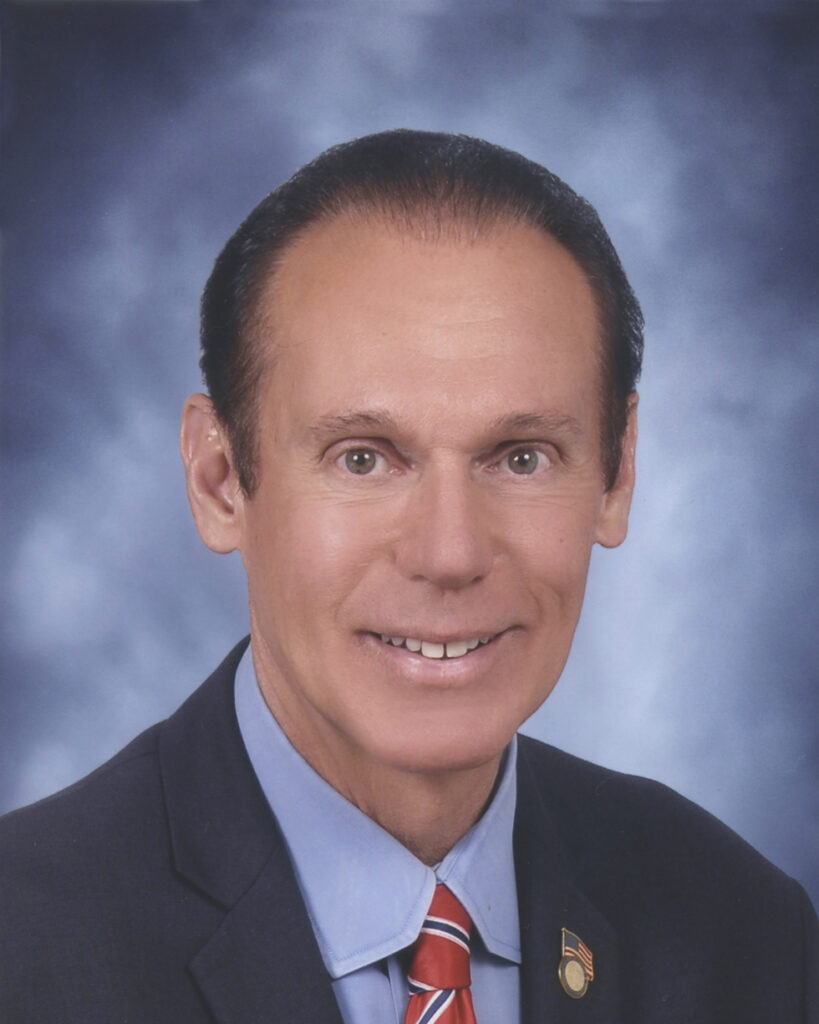
Jim Dear, Carson City Councilman, District 2
Editor’s Note: At The Carson Compass, we believe leadership is about more than policy—it’s about people.
Our Leadership Profile Series introduces the individuals shaping Carson’s future, highlighting their stories, values, and vision. Through these conversations, we invite you to understand what drives them and how they see our city evolving.
By bringing these perspectives forward, we aim to strengthen the connection between our community and those who lead it—while celebrating what makes Carson truly special.
Carson, CA — Carson City Councilmember Jim Dear says his commitment to public service began long before he first ran for office, shaped by a family deeply involved in education, labor activism and the civil rights movement.
In a recent interview with the Carson Compass, Dear reflected on a political career spanning decades in Carson government, including service as a councilmember, four terms as mayor and a term as city clerk.
Born and raised in the Harbor Area of Los Angeles County, Dear said he grew up only a few miles from what would eventually become Carson City Hall.
Carson incorporated in 1968, when Dear was a teenager, transforming an area he described as a mix of farmland, industrial uses and wetlands into an independent city.
“My parents raised me to be basically a public servant,” Dear said, noting that his mother, brother and sister all became educators. “Public service is kind of in our blood.”
Dear, a UCLA graduate who studied urban and regional planning before switching to political science, said he entered government after working for elected officials at multiple levels of government, including a congressman, state legislators and the lieutenant governor’s office.
He also worked as a teacher and spent years involved in Democratic politics and community service before seeking elected office himself.
According to the City of Carson, Dear was first elected to the City Council in 2001 and won a special election for mayor in 2004.
He went on to serve as mayor for 11 years before later serving as city clerk and returning to the council.
Dear repeatedly returned to two themes he said have guided his public service career: public safety and economic development.
“My first priority is public safety,” he said. “The second priority is economic development, which entails bringing tax revenue to the city, bringing amenities to the city to make Carson a more convenient city for our residents.”
Dear said one of his early initiatives was the creation of a Public Safety Task Force, which helped lead to the development of Carson’s Park Enforcement Team.
He described the program as a response to gang activity that affected city parks during the 1980s and 1990s.
“We had, in the 1980s and 1990s, gang members who were rampant in Carson,” Dear said. “They were claiming our public parks as their parks.”
Economic development, Dear said, was intended not only to expand shopping and dining options but also to generate revenue needed to support city services.
He said Carson was largely a “bedroom community slash industrial community” when he entered office and that he sought to transform it into what he calls a “destination community.”
Among the projects he highlighted were efforts to attract new restaurants, bring a movie theater to Carson and establish the Carson International Sculpture Garden.
The city’s official biography of Dear similarly credits him with helping create the sculpture garden and advancing economic development initiatives during his tenure.
Dear said his broader vision was to make Carson a model for diverse communities nationwide.
“I had a vision, a dream, that Carson, California, could become a model community for the United States,” he said. “An ethnically diverse community that is prosperous, that is safe, that is attractive, a place where people want to move to and raise their families.”
The councilmember also discussed current debates over housing and development. Like many California cities, Carson faces pressure from state housing mandates.
Dear said he supports building additional housing but believes projects should be placed strategically.
“Don’t take prime retail commercial property and build housing on top of it,” he said. “Because it will never in our lifetime become a successful commercial center once houses are built there.”
He pointed to sites near Carson Street and Figueroa Street and near Avalon Boulevard and the 405 Freeway as examples of locations he believes could support commercial development rather than residential projects.
Outside City Hall, Dear said he remains active in the community, attending local events, meeting residents and advocating for environmental improvements.
He cited ongoing concerns about conditions in the Dominguez Channel and expressed support for future recreational and environmental enhancements, including bike paths and trails.
A retired teacher and self-described history enthusiast, Dear said he continues to draw satisfaction from helping residents solve problems.
“My reward is making Carson this model community, making people’s lives better,” he said. “When I help people, it brings joy to me.”
As Carson continues to confront questions about growth, housing and economic development, Dear said the city’s future will depend on long-term planning, cooperation and a willingness to think beyond immediate challenges.
“One definition of the word ‘vision,’” he said, “is the ability to see something that is invisible to most people.”